Nutrition · Tool · 3 min ·
How much should you drink when you train? Measure your own sweat rate
Do you really need to drink more water when you train? Most hydration rules are one number for everyone, but people sweat very different amounts.
Weigh yourself before and after a session, add what you drank, and find your own sweat rate. See what a small weight drop means, when it matters, and why drinking more than you sweat is the mistake to avoid. A rough guide for healthy adults, not medical advice.
Why sweat is worth measuring
Most hydration advice is a fixed number: "eight glasses a day", "a bottle every hour". The trouble is that people lose very different amounts of sweat. A small person training in a cool room might lose around half a litre an hour. A larger person running in the heat can lose well over a litre. One rule cannot fit both.
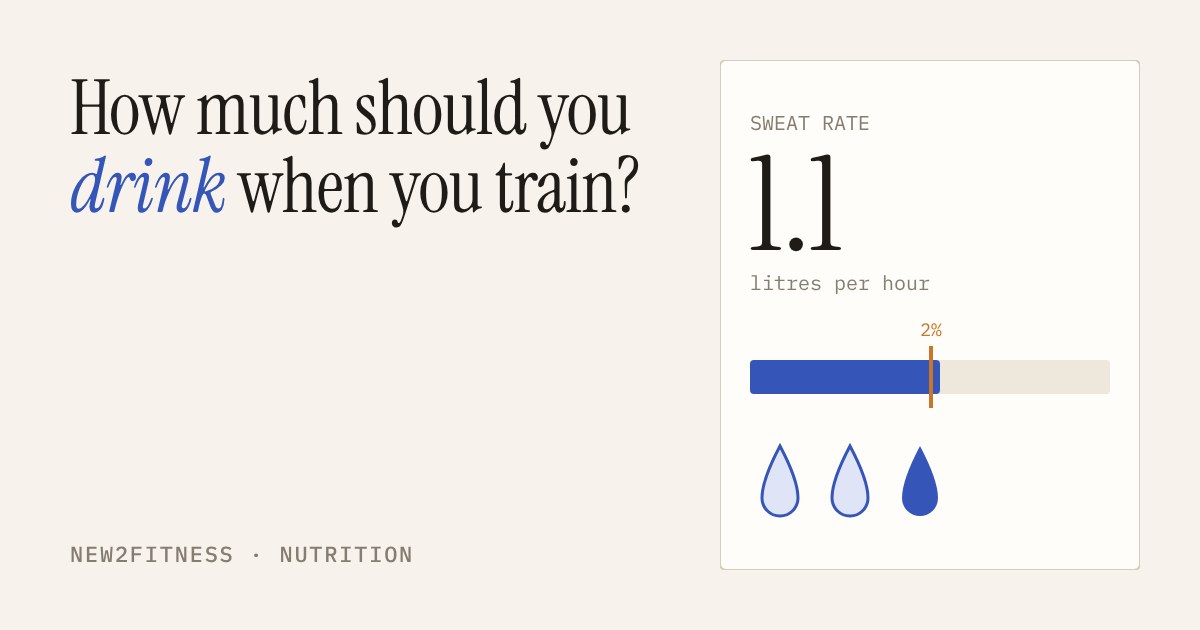
The good news is that you can measure your own number with a bathroom scale. Weigh yourself before and after a session, add what you drank, and the difference is what you sweated out. Below, put in your numbers and see what it means.
Try the three examples. The easy gym session loses a small amount and drinking to thirst covers it. The warm-day run loses more, enough to cross the 2% line. The last one shows someone who drank far more than they sweated and ended up heavier, which is the one to avoid.
How to measure it properly
- Weigh yourself before, with an empty bladder and in the clothes you'll wear, or without clothes.
- Train as normal and note what you drink, in millilitres. A typical sports bottle is 500–750 ml.
- Towel off, take off sweaty clothes, and weigh again straight after. Use the same scale.
- Put the numbers in above. Repeat on a hot day and a cool day: your rate changes with weather, effort and what you wear.
One session is only a rough estimate. Two or three give you a useful range.
What the number means
Sweat rates vary a lot between people and conditions, so there is no single right answer. What research does support is simple. Losing more than about 2% of your body weight in fluid is linked to poorer endurance performance. And drinking more than you sweat has no benefit, while it is the main cause of the rare but serious condition where blood sodium drops too low (hyponatraemia).
For most beginner sessions, an hour of lifting or an easy jog, the practical advice is plain: drink when you are thirsty, start the session having drunk normally through the day, and rehydrate with your next meal. You do not need to force fluid or count sips.
Do you need an electrolyte drink?
For a typical hour of exercise, water is fine and your food replaces the salt. Sports drinks and electrolyte tablets can make sense in long, hot sessions of several hours or if you sweat a great deal. They are optional, and food first is a good rule.
Who this isn't for
This is a rough guide for healthy adults doing ordinary workouts. If you have a heart or kidney condition, take medication such as diuretics, are pregnant, or have been told to limit or increase fluids, check with your doctor before using a number like this. If you feel dizzy, confused, or get a pounding headache during exercise, stop and get help.