Nutrition · Tool · 4 min ·
How much fibre do you need? Build your day and see how close you get to 25 g
Most people eat less fibre than the 25 g a day that official advice treats as adequate, and it's easy to see why: white bread, white rice and juice add almost none.
Build a normal day from everyday foods, tap the servings up and down, and watch your total move against the target line. Then see which single swap closes the gap fastest, and how to raise your fibre without stomach trouble.
Fibre is the part of plants your body can't fully digest, and most of us eat too little
Fibre doesn't get the attention protein does, but it matters for the thing most beginners notice first: how your gut feels while you train more and eat more. Official advice for adults lands in a similar place. The European Food Safety Authority treats 25 g a day as adequate for normal bowel function, and the WHO/FAO says more than 25 g. Some countries aim higher: about 30 g in the UK and Germany, 25–35 g in the Nordic countries.
The catch is that fibre is easy to miss. White bread, white rice, juice and most snacks contribute almost none. A day that looks healthy can still land at 12–15 g. Use the tool below to see where your own day lands.
Where fibre comes from
Fibre comes only from plants. The richest everyday sources are beans, lentils and chickpeas, which carry around 7–9 g per 100 g cooked. Next come whole grains (oats, wholemeal bread, brown rice), vegetables, fruit with the skin on, nuts and seeds. Refining grain strips most of the fibre, which is why a slice of white bread has under 1 g and a slice of wholemeal about 2 g.
Notice how a single portion of beans or lentils does the work of three or four other foods. If you want one change that moves the number, that's usually it. Swapping white versions for wholegrain ones is the second: it costs nothing extra and adds a gram or two each time.
What fibre does for you
Fibre keeps digestion regular. Many people also find fibre-rich meals more filling, which can make it easier to eat sensibly without counting anything. Population studies link higher fibre intakes with better long-term health, though those studies show association, not proof that fibre alone is the cause.
For training, think of fibre as part of your base diet rather than a performance trick. It doesn't build muscle. What it does is keep the food you eat for muscle (protein, carbohydrate, calories) coming from whole foods rather than only from powders and refined snacks.
A worked example
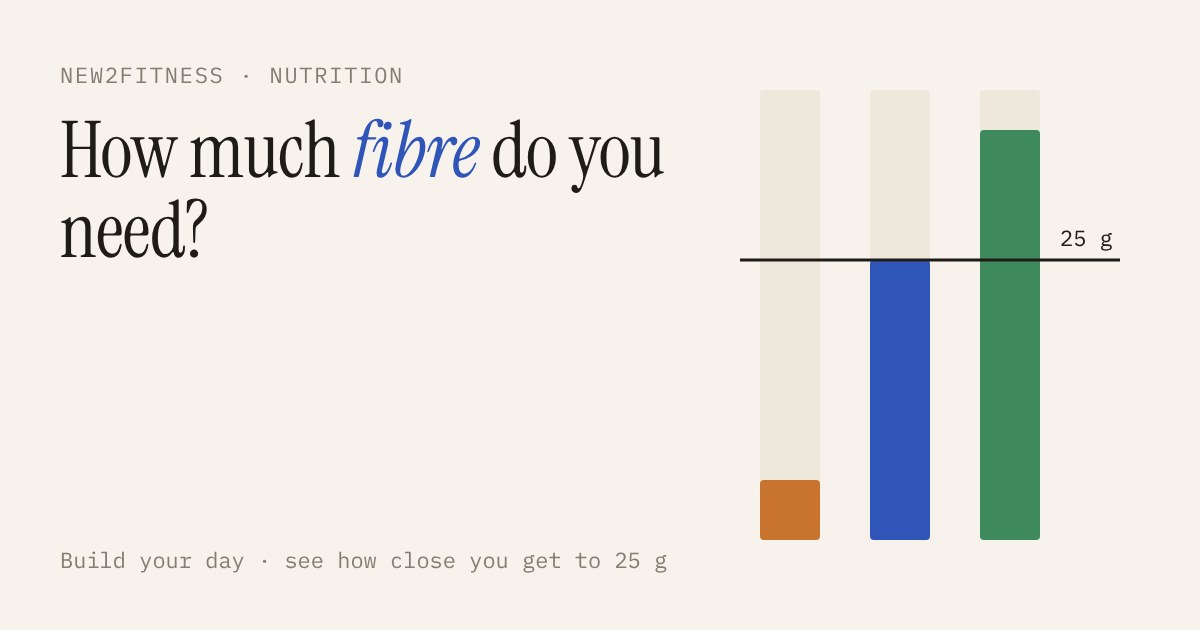
Try the two presets. The low-fibre day is two slices of white bread, a banana and a bowl of white rice, and it adds up to about 5 g. That isn't an unusual day: toast, a sandwich, a rice dish. The higher-fibre day swaps in porridge, wholemeal bread, brown rice and some fruit and vegetables, and adds a portion of beans or lentils. It lands above 25 g without any exotic food.
The lesson isn't to eat perfectly. It's that a few swaps (wholegrain for white, a handful of nuts, one meal built around beans) do most of the work. If you look at your own week and find you are well under the line, pick one swap and keep it for a fortnight before adding another.
Reading a label
On packaged food, fibre is listed in the nutrition table per 100 g. As a rough guide, a food with 6 g or more per 100 g is usually called high in fibre, and 3 g or more counts as a source, though the exact wording rules differ by country. Compare the same type of product (two breads, two cereals) and pick the higher number, then check the serving, since a 100 g column and a one-slice portion can look very different.
Timing around workouts
A big bowl of beans an hour before a hard session isn't pleasant for most people. Fibre can slow stomach emptying, and during exercise that can mean bloating or stomach cramps. Keep the pre-workout meal small and lower in fibre, and put the beans, wholegrain and vegetables in your other meals. Everyone's gut is different, so try changes on an easy day first.
How to raise your number without regret
- Go slowly. Add one extra high-fibre food at a time and give it a week or so. A sudden jump is the classic cause of gas and bloating.
- Drink water. Fibre works with fluid; more fibre with too little water can leave you more uncomfortable, not less.
- Food first. Fibre supplements aren't needed for most people. Whole foods bring other nutrients with them.
- Check the label. Packaged foods list fibre per 100 g. Compare two breads or two cereals in seconds.
Who this isn't for
The tool gives a rough picture from approximate values, not a diagnosis or a meal plan. If you have a digestive condition such as IBS, coeliac disease or inflammatory bowel disease, if you've had bowel surgery, or if you have ongoing stomach pain or changes in your bowel habits, talk to a doctor or a dietitian before changing how much fibre you eat. Some people with these conditions are told to eat less of certain fibres, not more.