Strength · Explainer · 3 min ·
How wide should your bench press grip be? Slide your grip and see where your forearms point
Your bench press grip decides where your forearms point when the bar touches your chest. Set your shoulder width, pick how far you let your elbows flare, then slide your grip and watch the forearms lean in or out.
A 2021 study found very narrow grips cost about 7% of the load, while medium and wide were similar. Here is how to find a grip that feels steady for you.
Walk into any gym and you will see the bench press done with hands barely outside the shoulders, hands near the plates, and everything in between. Grip width looks like a matter of taste. It is really a decision about where your forearms and elbows end up when the bar is on your chest, and that changes how the lift feels.
Grip and elbows travel together
At the bottom of the rep, the bar rests on your chest and your upper arms point out at an angle from your body. Your elbows sit wherever that angle puts them. Your hands sit wherever your grip puts them. If the two line up, your forearms are vertical and the bar sits straight above your elbows. If they don't, your forearms lean.
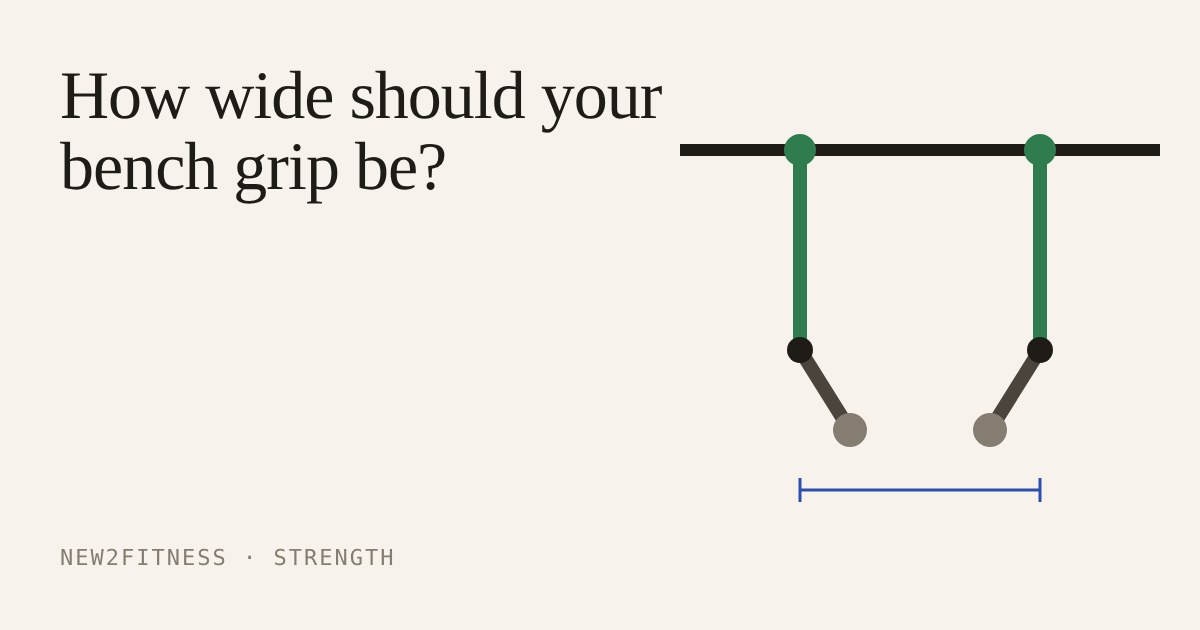
The picture below is a simplified front view of that bottom position. It assumes an upper arm of 30 cm and a forearm of 26 cm, which are typical-ish, not yours. Set the distance between your shoulder tips, pick how far you let your elbows flare, then slide the grip.
What the research found
A 2021 study of 28 men compared three grips: narrow (index fingers about shoulder-width apart), medium, and wide at 81 cm, the widest grip allowed in powerlifting competition. In both novice and trained lifters, the narrow grip let people lift about 7% less for six reps than medium or wide. Medium and wide were not different from each other. Triceps activity was lower with the wide grip, which fits the idea that a wider grip hands more of the work to the chest and shoulders.
That is one small study of young men, over one session each. It measured how much they could lift and muscle activity, not how much muscle they grew. So the safe reading is modest: very narrow grips cost you some load, and somewhere in the middle to wide range is fine.
How to find your grip
Start with your hands a little wider than your shoulders and film a few light reps from the foot of the bench. At the bottom, look for forearms that are close to vertical. If your hands sit well outside your elbows, move in a little. If your hands sit inside your elbows, move out a little. Change by a finger or two at a time, then give each new grip a few sessions before judging it.
Two things in the picture are worth noticing. A flared elbow angle needs a much wider grip to keep the forearms vertical, so a wide grip and flared elbows are a package. And the competition limit of 81 cm is a rule for contests, not a target for the rest of us.
Who this isn't for
If you feel pain in your shoulder, elbow or wrist when you bench, a different grip is not a fix to try on your own. Stop and check with a doctor or physio. Use safety arms or a spotter whatever your grip, and keep your thumbs wrapped around the bar. This guide is general information, not medical advice.
What to look for
Pick the grip where your forearms look close to vertical at the bottom and the bar feels steady. Keep it consistent for a few weeks so you can track your progress on one setup.