Strength · Tool · 3 min ·
Is one side stronger than the other? Type one set per side and see your gap
Right arm does ten rows and your left manages seven? A small gap between your two sides is normal, and it only shows when each side lifts alone.
Type in one set per side and see how big your gap is, which side to start with and how to match reps so it stops growing. Includes when a difference is worth showing a doctor or physio.
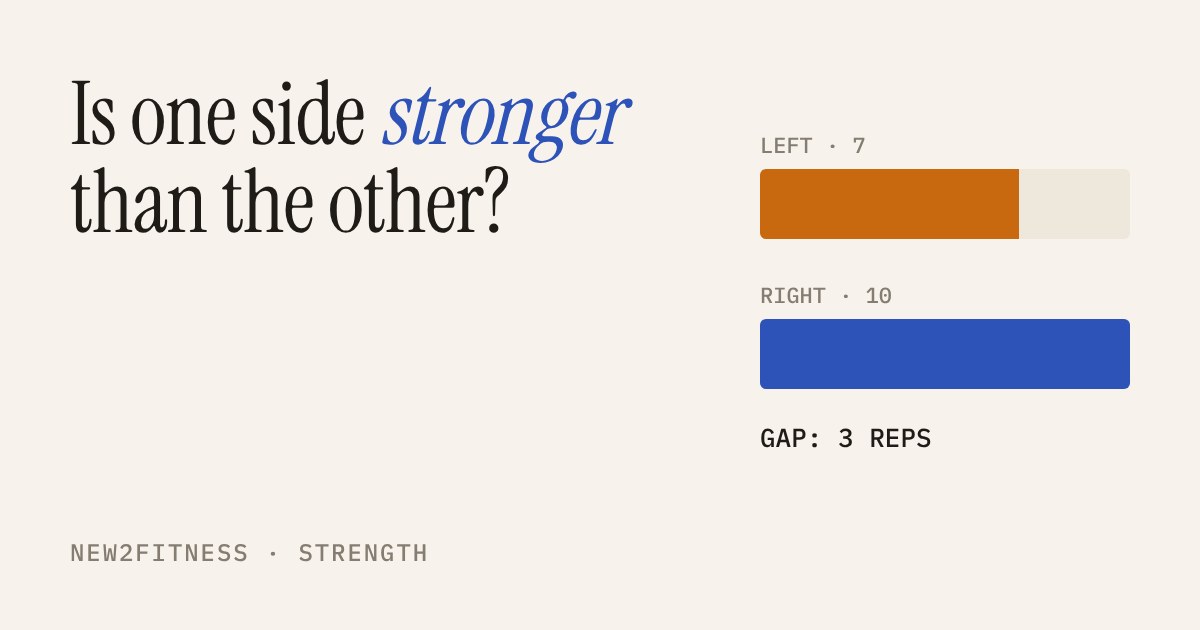
Is one side stronger than the other?
You do a set of one-arm dumbbell rows and your right arm grinds out ten clean reps. Your left arm stops at seven. Is something wrong? Almost certainly not. Most people have a stronger side, just as most people have a hand they write with. This guide shows you how big your gap is and what to do with it.
Why the two sides are never identical
Your left and right limbs are trained by different habits. You carry the shopping with one hand, kick a ball with one foot, scroll with one thumb. Your nervous system also gets better at driving the muscles you use most. So a small difference in strength between sides is normal and usually says nothing about your health.
It only shows up when each side works alone. On a barbell squat or a bench press, both sides push one shared bar, so the stronger side can quietly do a bit more of the work and nobody notices. A dumbbell row, a split squat or a one-arm press gives each side its own load. That is where the gap becomes visible, and also where you can do something about it.
Find your own gap
Pick a one-sided exercise, use a weight you could lift for about 8 to 12 reps, and do one set on each side, stopping when the next rep would look sloppy. Leave about two reps in the tank. Type the numbers in below.
How to train around a gap
You don't need a special programme. A few habits are enough.
- Choose the weight for the weaker side. That side sets the limit. The stronger side then does the same work, so the gap stops growing.
- Start with the weaker side. It gets you at your freshest, and its rep count becomes the number to match.
- Don't chase the stronger side's best. If you always let the strong side do extra reps, you get an even bigger difference back.
- Use some one-sided exercises. Dumbbell rows, split squats, step-ups and one-arm presses show a gap honestly. Barbell and machine lifts can hide it. Include both kinds.
Should you do extra sets for the weaker side? You can, but keep it modest, perhaps one extra set. It is optional. Matching reps and being patient does most of the job.
Will the gap ever close?
Often it shrinks, sometimes it doesn't fully disappear, and that is fine. Nobody is perfectly symmetrical, and you don't need to be to get stronger, build muscle or feel good. One more curiosity: when you train one limb hard, the untrained limb gets a little stronger too. Researchers call it cross-education, and it is thought to come mostly from your nervous system learning the movement. It is one reason both sides improve together, even when you only push the weaker one.
When a gap is worth a second opinion
Strength differences by themselves are not a medical problem. See a doctor or physio if one side suddenly gets weaker, if the weakness comes with numbness, tingling or pain, if you are recovering from an injury, or if a joint feels unstable or catches during a lift. This guide is general information and not medical advice, and it can't tell you why your sides differ.
What to take away
- Left and right being a bit different is normal, and it shows up when each side lifts on its own.
- Use the weaker side to choose the weight, and start with it.
- Stop the stronger side at the same reps so the gap doesn't grow.
- A sudden, large or painful difference deserves a professional's eyes.