Strength · Explainer · 5 min ·
Do you need a lifting belt? Set your lift and load and see when it is worth trying
A lifting belt looks like safety gear, but the evidence says it is closer to a small performance tool. It gives your abs something to push against, which raises the pressure that steadies your trunk on heavy sets.
Pick a lift, set how heavy the set is and say how well you brace without a belt, and the tool shows whether a belt is skip-it, maybe or worth-trying territory. Not for anyone with high blood pressure, a hernia, back pain or pregnancy: check with a doctor or physio first.
Walk into any gym and you will see people cinching a thick leather belt before a heavy squat. It looks like safety gear. It is closer to a performance tool, and most beginners do not need one yet. Here is what a belt actually does, what it does not, and how to tell whether your set is one where it might help.
What a belt actually does
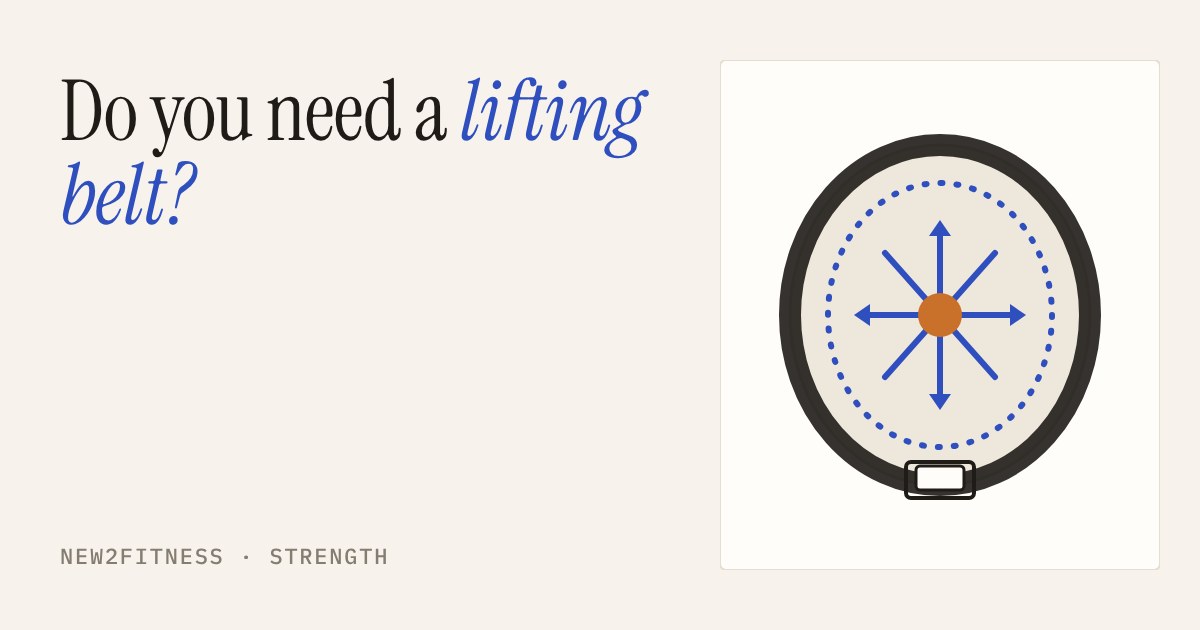
When you brace, you take a breath into your belly and tighten the muscles all around your middle, so your trunk becomes one firm column. A belt gives those muscles something to push against, a bit like the wall of a barrel. That raises the pressure inside your abdomen, and that pressure helps keep your spine steady while the bar moves.
The numbers come from small lab studies. In one study of squats at about an eight-rep effort, pressure inside the abdomen was roughly a quarter to two-fifths higher with a belt than without. In small studies of squats, lifters also tended to move the bar a few percent faster with a belt on, especially on the last reps. That is a modest edge on a hard set, and the studies were small, so treat the sizes as a rough idea.
Notice what is missing from that list: your muscles do not get stronger because of a belt. It helps you use the strength you have, on the sets where your trunk is part of what limits you.
What a belt does not do
A belt does not have good evidence for preventing injury. Official bodies that looked at back belts for workers found the protection claims were not backed by science, and the research on lifters does not show a clear drop in injuries either. Many belt users wear one to protect their back, which is a reasonable thought, but it is a hope more than a proven effect. A belt can also give a false sense of security, which is the last thing you want under a heavy bar.
It will not fix poor form, and it will not protect a back that is already hurting. If you have back pain, see a doctor or physio rather than reaching for a belt.
Learn the brace first
Because a belt only works on top of a good brace, the brace is the skill worth practising. Stand with your feet set for the lift, breathe in low so your belly and the sides of your lower ribs widen, then tighten all the way around your middle as if you were about to be nudged in the stomach. Hold that through the hard part of the rep and breathe out at the top, or after you have passed the sticking point. Practise it with an empty bar and with light sets, so it is automatic by the time the weight is heavy.
Try it on your own set
Pick a lift, say how heavy the set is compared with the most you could lift once, and tell the tool how your bracing feels without a belt. It shows where your set falls and what a belt would likely add.
If you do try one
Fit matters more than the brand. Before you brace, you should be able to slip a finger or two between the belt and your torso. Once you breathe in and brace, it should feel snug, but never so tight that you cannot take a full breath. Put it on for your heaviest sets only, not for warm-ups or lighter work, and do not use it to cover up a lift that is breaking down.
It is also worth keeping some heavy sets bare. That way your trunk keeps learning to do the job itself, and you are not stuck if you ever train without a belt.
Who should check first
A belt makes it easier to build up a lot of pressure inside your body, and holding your breath against it can raise blood pressure for a moment. If you have high blood pressure, a hernia, recent abdominal surgery, leaking when you lift, back pain, or you are pregnant, talk to your doctor or physio first. This guide is not medical advice, and they can tell you what is right for you.
The short version
If you are new, spend your first months learning to brace and adding weight steadily. A belt is a small extra for heavy squats, deadlifts, presses and rows once your own brace is solid. It is not a shield for your back, and it does not make you stronger by itself. If you decide to get one later, you will know why you are buying it.