Strength · Tool · 4 min ·
Can't do a pull-up yet? Type what you can do and see your next rung
Can't do a pull-up yet? That isn't a verdict on you. It just means the move is too big a jump. Most coaches break the first pull-up into smaller steps: the hang, the inverted row, the slow lowering, then the full rep.
Type in what you can do today and the ladder shows your rung, a sensible week of training, and the check that moves you up. The targets are coaching rules of thumb, not research findings.
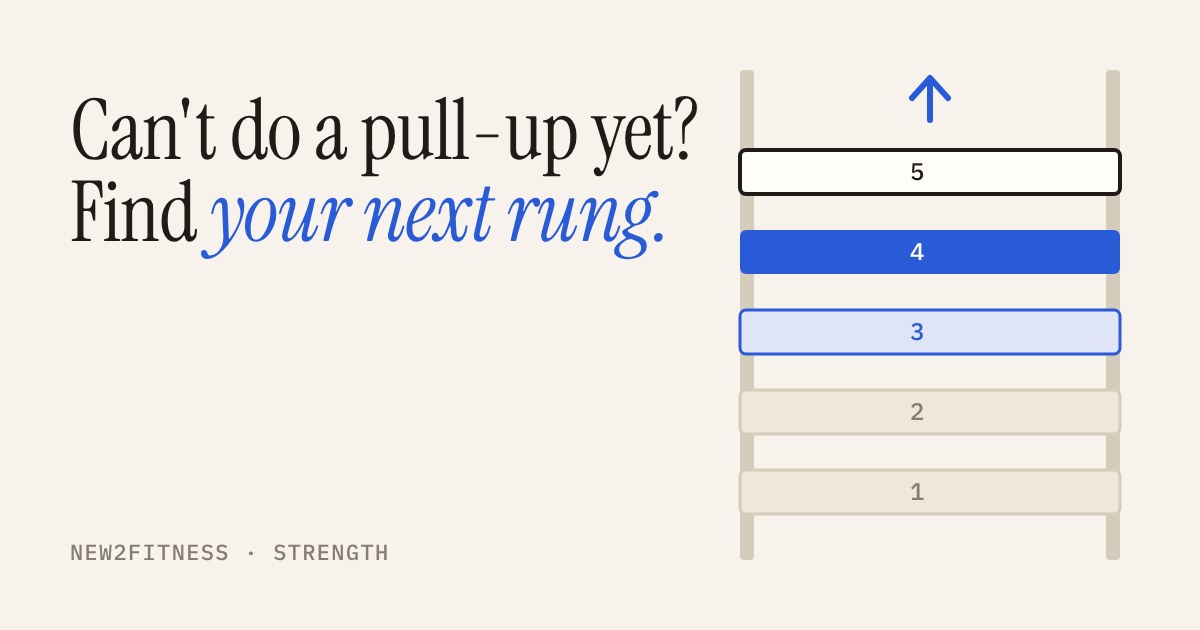
A pull-up asks you to lift your whole body with your arms and back. If you can't do one yet, that isn't a verdict on you. It means the move is too big a jump, and the fix is a ladder of smaller steps that each get you a little closer.
The ladder, in plain words
Most coaches break the first pull-up into four building blocks. These steps come from common coaching practice rather than from trials comparing one ladder with another, so treat the numbers below as sensible rules of thumb, not laws.
- The hang. Hold the bar with straight arms. It builds grip and gets your shoulders used to bearing your weight. A rough first target is 20 to 30 seconds.
- The inverted row. Lie under a bar set about waist height and pull your chest up to it. The more upright your body, the less of your weight you pull, so bending your knees makes it easier and raising your feet makes it harder. A rough target is 3 sets of 8 to 10 reps.
- The slow lowering (a "negative"). Step or jump to the top position, then lower yourself as slowly as you can. Lowering is easier than lifting, so it lets you practise the movement before you can do the lift. A rough target is lowering over about 5 seconds, 3 times.
- The first pull-up. When the blocks above feel solid, try one. If it doesn't come, a resistance band looped over the bar and under your foot or knee takes some of your weight.
Find your rung
Put in what you can do today. Test each one fresh, once, and stop well before it hurts. The ladder shows where you are and what a sensible week looks like.
The ladder reads your numbers in order, so a strong hang with weak rows still lands you on the rows rung. That's deliberate: the weakest link is the one to train.
Why this works
Strength is specific. You get better at the thing you practise, so the best preparation for a pull-up is something close to a pull-up that you can actually do. The row trains the same pulling muscles in a position you can control. The slow lowering trains the same path as the pull-up, just in reverse. And the hang is the quiet one: gripping and holding your weight is often the first thing that gives out.
Body weight matters too, because you lift all of it. That makes the pull-up hard for most people at the start, and it is normal to need weeks, sometimes months, to get your first. Progress can feel slow and then arrive suddenly, once the blocks are in place.
Common stumbling blocks
- Swinging. Kicking or swinging makes a rep look easier but hides whether you can really do it. Keep it still.
- Skipping straight to a band. Assistance is fine, but if your grip or rows are weak you'll stall on the band. Use it as one step, not the whole plan.
- Training too often. Tendons and shoulders need recovery. Two to three sessions a week is plenty, and more is not faster.
- Chasing reps through pain. Mild muscle fatigue is normal. Sharp or lingering pain in your shoulder, elbow or wrist is not. Stop, and check with a doctor or physio before you carry on.
Who this isn't for
If you have a shoulder, elbow or wrist problem, are pregnant, or have a heart or blood pressure condition, ask a doctor or physio before hanging from a bar or training close to your limit. This guide is general information, not medical advice.