Nutrition · Tool · 5 min ·
Which foods give you the most protein? Build a day and compare protein per 100 calories
Protein per 100 g on a label can mislead, because water adds weight but no calories. What matters for building muscle is often how much protein you get for the calories you eat.
Build a day from twelve common foods, set your own protein target, and watch the grams, the energy and the protein share update as you drag the portions. Food first: powder only fills a gap.
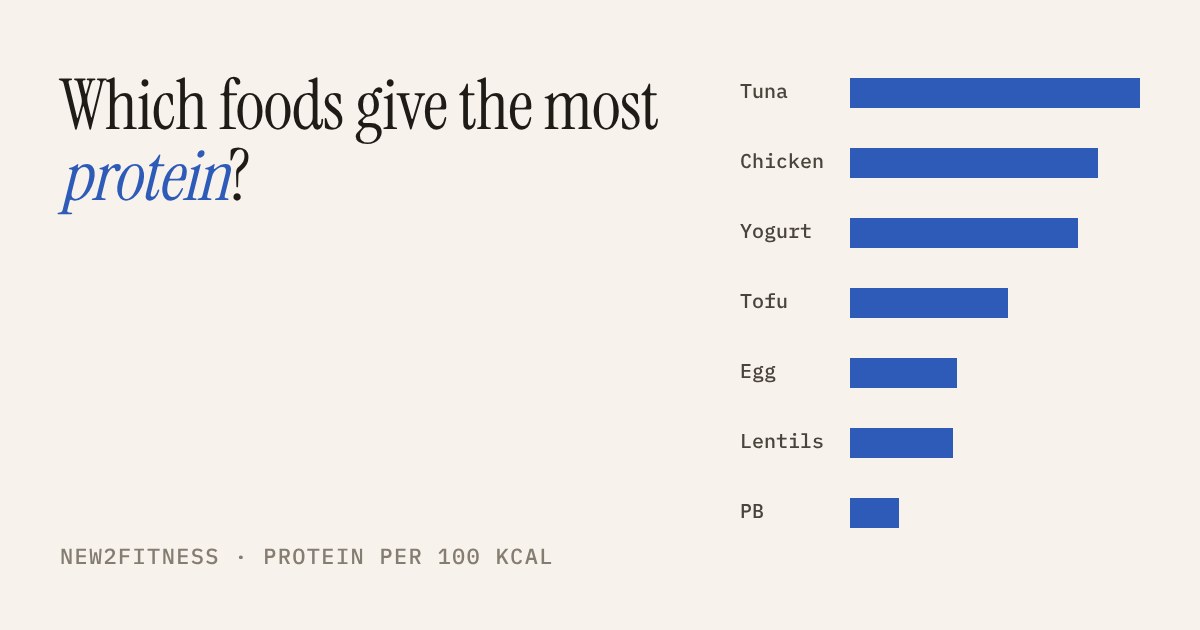
Same protein, very different cost in calories
A food label gives you protein per 100 g. That is the number most people compare, and it can mislead. Water weighs a lot and has no calories, so a spoonful of peanut butter and a spoonful of yogurt hold wildly different amounts of energy even when the protein is similar. The more useful question for building muscle is often: how much protein do I get for the calories I am eating?
That is protein per 100 kcal. Cooked chicken breast gives about 19 g per 100 kcal. Tuna and cod give around 22. Lentils give about 8, and peanut butter about 4. None of these foods is bad. They simply do different jobs, and seeing the numbers side by side makes it easier to build meals that fit your appetite and your target.
Build a day and watch the numbers
Set a daily protein target, then drag the portions. The bars show how much protein each food gives per 100 kcal, so the leanest sources sort to the top. Try the three example days, then change them.
How it is worked out. Protein = grams × protein per 100 g ÷ 100. Energy works the same way. The protein share of energy is protein grams × 4 kcal ÷ total kcal (protein gives about 4 kcal per gram). Real foods vary by brand, cut and cooking method, so treat every figure as a good estimate, not a measurement. Who it isn't for: anyone told by a doctor or dietitian to limit protein, for example with kidney disease, or anyone managing an eating disorder. Follow their advice, not a calculator.
What the comparison shows
Lean animal foods and dairy sit at the top: chicken breast, canned tuna, white fish, plain Greek yogurt and cottage cheese all give roughly 14 to 22 g of protein per 100 kcal. Eggs and tofu land in the middle, with tempeh just below them. Beans and lentils come lower, and peanut butter lowest, because they bring carbohydrate or fat along with the protein.
A lower number is not a failing. Lentils and chickpeas bring fibre, tofu and tempeh bring a good amount of protein per serving, and a spoon of peanut butter makes a meal easier to enjoy. The density figure matters most when you have a modest appetite or little room in the day, and you want the protein to fit. If you eat plenty and train hard, a mix of foods you like and will keep eating beats a perfect ranking.
Two details are easy to miss. First, cooked and raw weights differ: raw chicken has about 22 g of protein per 100 g, cooked about 31 g, because cooking drives out water. Weigh food in one state consistently. Second, a single food rarely does the whole job. Notice how a plant day needs larger portions to reach the same target, so most people who eat this way combine several sources through the day.
How much protein is enough?
For most healthy adults, the general recommended intake is about 0.8 g per kg of body weight a day. People who lift weights regularly often aim higher: in pooled studies of resistance training, extra muscle gains levelled off at around 1.6 g per kg a day. For a 70 kg person that is roughly 110 g, which is why the calculator starts there. Your own number can be lower or higher, and it is a target to aim near, not a line to hit exactly each day.
Food first, then powder if there is a gap
Whole foods bring other nutrients and keep meals interesting, so start there. A protein powder is a convenient way to cover a shortfall when your day falls short, but it is not required. If you track your day for a week with a tool like the one above and find you are regularly 20 to 30 g short, a scoop or an extra yogurt both do the job.
What to look for
- Protein per portion, not just per 100 g. A food can have a high density and still be a small portion.
- Calories you actually want. If you are eating enough, density matters less. If appetite is the limit, it matters more.
- Foods you will eat again. Consistency over weeks beats the best food on paper.
- Variety across the week. Mix animal and plant sources so you also get fibre and other nutrients.
If you have a medical condition, are pregnant, or are unsure how much protein suits you, check with your doctor or a registered dietitian before changing how you eat.