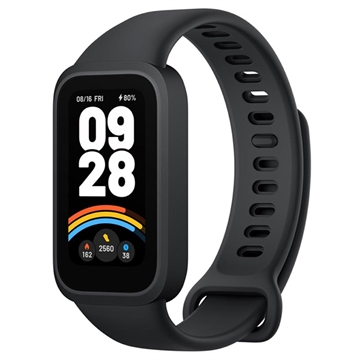
A fitness watch is the easiest piece of kit to overbuy. The box lists dozens of features, and almost none of them change how well your first year of training goes. What helps a beginner is a short list: a step count that nudges you to move, a heart rate you can glance at, and a record that shows you turning up week after week.
So the useful question is not "which watch is best?" but "which of these things will I actually use?" Pick your own below and see which kind of device covers them.
What a beginner actually gets from a watch
The honest benefit is behavioural. A watch makes your activity visible, and visible things are easier to repeat. Seeing "four workouts this week" on your wrist is a small reward that keeps you coming back. That works just as well on a cheap band as on a premium watch.
What a watch does not do is make your training work better by itself. Lifting with good effort, eating enough protein and sleeping reasonably will do far more than any extra metric. If a number starts to make you anxious rather than motivated, that is a sign to look at it less often.
The numbers worth knowing, and how far to trust them
Steps are counted by motion sensors. They are good for spotting trends, such as a week that was much lazier than usual, but the exact total can be off by a few hundred. Treat them as a rough gauge, not an exact score.
Heart rate on the wrist is measured by shining light into the skin. At rest and during steady effort it is usually reasonable. During fast, jerky movements, such as lifting or interval work, it can lag or jump. If you care about accurate heart rate, a chest strap is the better tool, as our guide on straps versus watches explains.
Sleep tracking estimates how long you slept and roughly when. It is decent at total time and weaker at telling sleep stages apart, so use it for patterns, not for a verdict on one night.
Blood oxygen, stress and "recovery" scores are estimates and not medical measurements. Do not use them to diagnose anything. If you have chest pain, dizziness, an irregular heartbeat or any health worry, speak to a doctor rather than relying on a watch.
GPS: the feature that really moves the price
GPS is the biggest dividing line between cheap and mid-range devices. A basic band usually has no GPS of its own and either borrows your phone's or simply estimates distance from your steps. A sports watch has its own GPS chip, so you can run or walk with only the watch and still get an accurate route, pace and distance.
If you mostly lift weights or walk to work, you will rarely notice the difference. If you plan to start running, built-in GPS is the first upgrade worth paying for.
What to look for
- Under about €60: battery life of a week or more, a screen you can read in daylight, and water resistance if you want to wear it in the shower or pool. Skip anything that promises blood-pressure or glucose readings; wrists cannot measure those reliably.
- Around €150–250: built-in GPS, a bright display, and a companion app you find easy to read. Check that it works with your phone, Android or iPhone, before you buy.
- Around €300 and up: better GPS reception, training guidance and longer-term fitness trends. Only worth it if you run regularly and will use the extra detail.
- At every budget: comfort. If the strap bothers you, you will stop wearing it, and a watch in a drawer tracks nothing.
What to buy, if anything
If you only want steps and a workout timer, the cheapest honest answer is to start with your phone and add a simple band later if you miss having something on your wrist. The picks below are examples at three price levels, matched to the tiers above, so you can see what each step up looks like. We have not tested them and they are not reviews; the links are affiliate links.