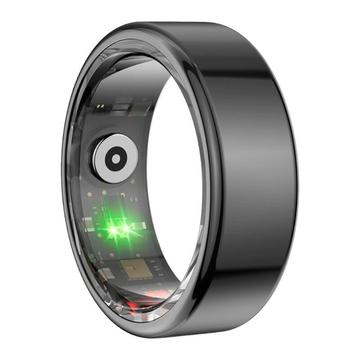
A smart ring is a band with sensors inside, worn on a finger. It counts steps, reads your pulse with a light sensor, and mostly shines at night: sleep, resting heart rate and how your body is trending. It has no screen, so you read everything in a phone app. For someone in their first year of training, the real question is not "is it clever?" but "what will it cost me, and what will it actually change?"
What a ring does well, and what it doesn't
A ring is light and you can forget you're wearing it, which is the whole appeal if a watch bothers you in bed. Battery life is typically days rather than hours: the makers quote up to about a week, and one reviewer of a leading model saw closer to five and a half days with workouts. Sizes matter, because a loose ring reads badly and a tight one is miserable.
What it can't do is show you anything during a workout. There is no screen, so no live heart rate, no pace, no lap button. Rings generally have no GPS of their own either; the one we looked at borrows your phone's. If you want to run by heart rate, a chest strap or a watch is the better tool (see our guide on when a strap beats your wrist).
Accuracy deserves the usual caution. Light-based heart-rate sensors on the wrist have shown their biggest errors during running in studies, and a ring uses the same method on a finger, so don't assume it is immune. Cheap rings in particular can be weak at sleep: one hands-on review of a budget ring found it counted time in bed as sleep and gave an overly rosy score. Treat every number as a trend to watch, not a measurement.
The price is more than the sticker
The part many first-time buyers miss is the running cost. Some rings charge a monthly membership to unlock most of the app; others are subscription-free; the cheapest ones just show raw numbers. Over a few years that changes the ranking. Try it below: change the years, and edit the prices to match what you see in the shops.
Notice what happens as you slide the years. The membership ring starts a little cheaper than the no-membership one, then overtakes it within the first year, because the fee keeps ticking. The budget ring stays far cheaper than either, but it may not give you much beyond raw numbers. None of these is "best"; they trade money for polish, and you only know whether the polish is worth it once you've worn one.
Will a ring help you train?
Only indirectly. A ring can't coach a set or count reps. What it can do is nudge you towards habits that matter for a beginner: a regular bedtime, a daily step habit, noticing when your resting pulse has been creeping up for a week. If those aren't your problem, a ring adds a charger and a bill to your life without changing your results. Food, sleep and showing up three times a week do the work.
It is also not a medical device. Don't use a ring to check blood oxygen, spot heart-rhythm problems or decide whether to train through symptoms. If you have chest pain, dizziness, an irregular heartbeat or any heart condition, speak to a doctor before you rely on any gadget, and let the doctor's advice beat the app's.
Who should skip it
Skip a ring if you want live numbers during workouts, if you run by heart rate or pace, if you hate monthly fees, or if you aren't going to open the app. A basic band or a simple watch covers those needs for less. Also skip it if rings are uncomfortable when you grip a barbell or a kettlebell: a hard band on the finger can pinch under load, so try the sizing kit or wear it on a different finger first.
What to look for
- At the lowest budget (around €30–50): accept that it's a step and sleep counter with raw numbers. Check the size range, since options are limited and there may be no sizing kit, and read the app's privacy terms before you create an account.
- At the premium level (around €350–500): decide first whether a monthly fee bothers you. Check that the ring works with your phone, how many sizes it comes in, whether a sizing kit is available, and how long the battery really lasts at your size.
- At any price: buy from somewhere with an easy return policy, because fit is personal, and expect to treat the numbers as trends.