Budget€5.99
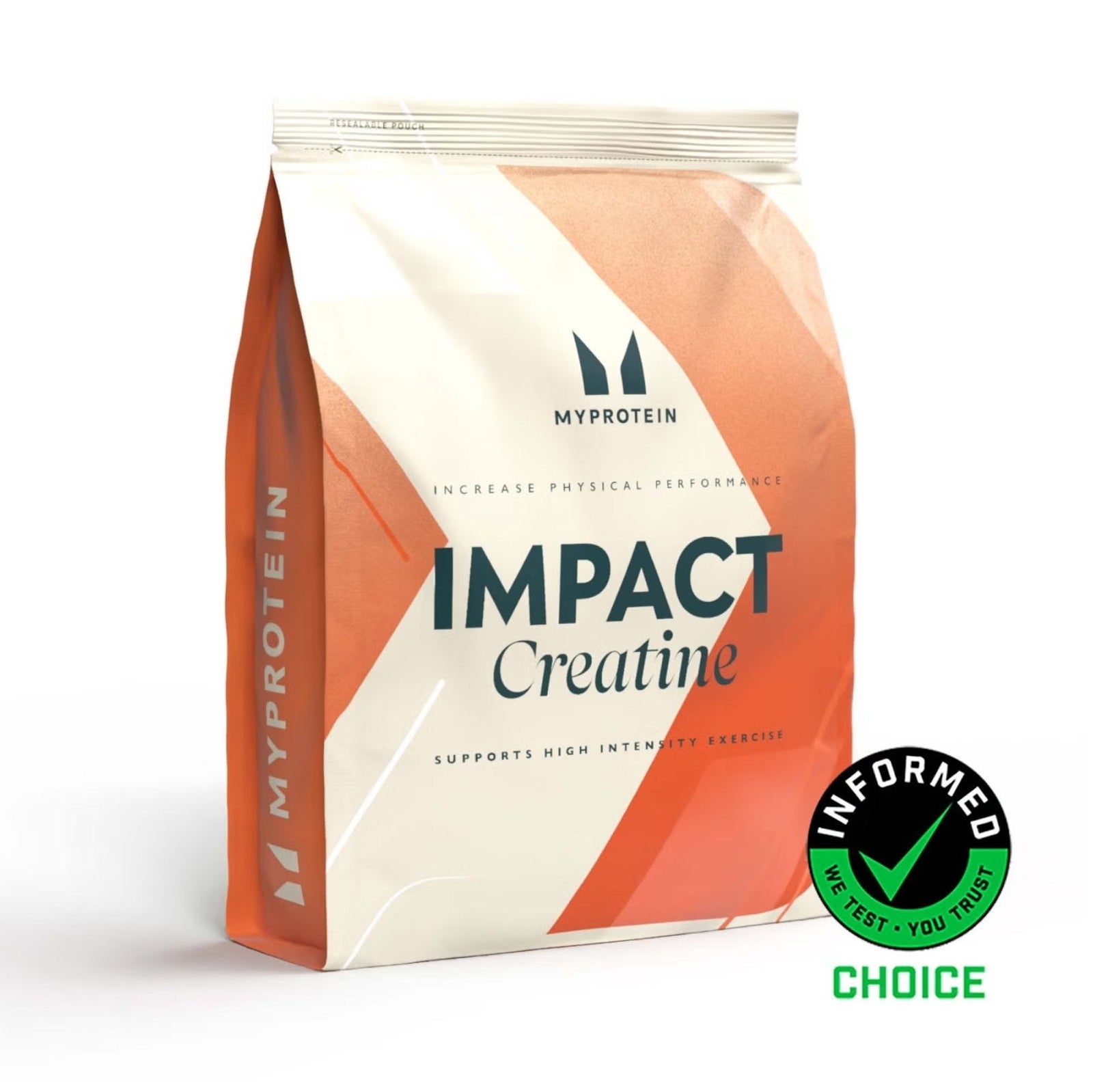
Creatine Monohydraat Poeder - 100g - 29servings - Naturel
A small tub of plain creatine monohydrate, enough for about a month. A low-cost way to try it before committing to a bigger bag.
100 g · 29 servings · Unflavoured
Nutrition · Explainer · 4 min ·
Creatine is one of the few supplements with solid evidence behind it, and the useful dose is small: 3 to 5 grams a day, any time of day. Slide the dose, try a loading week and see how fast your muscle stores fill up, and what a month of powder costs.
The guide also covers what to expect (a little water weight at first), who should ask a doctor first, and what to look for when buying: plain creatine monohydrate, the right size, and when quality marks are worth paying for. Food first, and training does the real work.
Creatine is a small molecule your body makes and also gets from meat and fish. Your muscles use it to refill their quick energy supply during short, hard efforts like a heavy set of squats. Taking extra as a powder tops up that store a little beyond what food alone gives you. Of all the supplements sold to lifters, it is one of the few with a long research record behind it, and the usual finding is a small, steady edge: a bit more strength and a bit more muscle over months of training. It is not magic, and it does nothing if you don't train.
The common recommendation from sports-nutrition researchers is 3 to 5 grams a day of creatine monohydrate, taken every day, including rest days. The time of day is not important; pick a moment you will remember, such as with breakfast. A "loading phase" of about 20 grams a day for a week fills your muscles faster, but it is optional. Taking 3 grams a day gets you to roughly the same place in about four weeks, with less chance of an upset stomach.
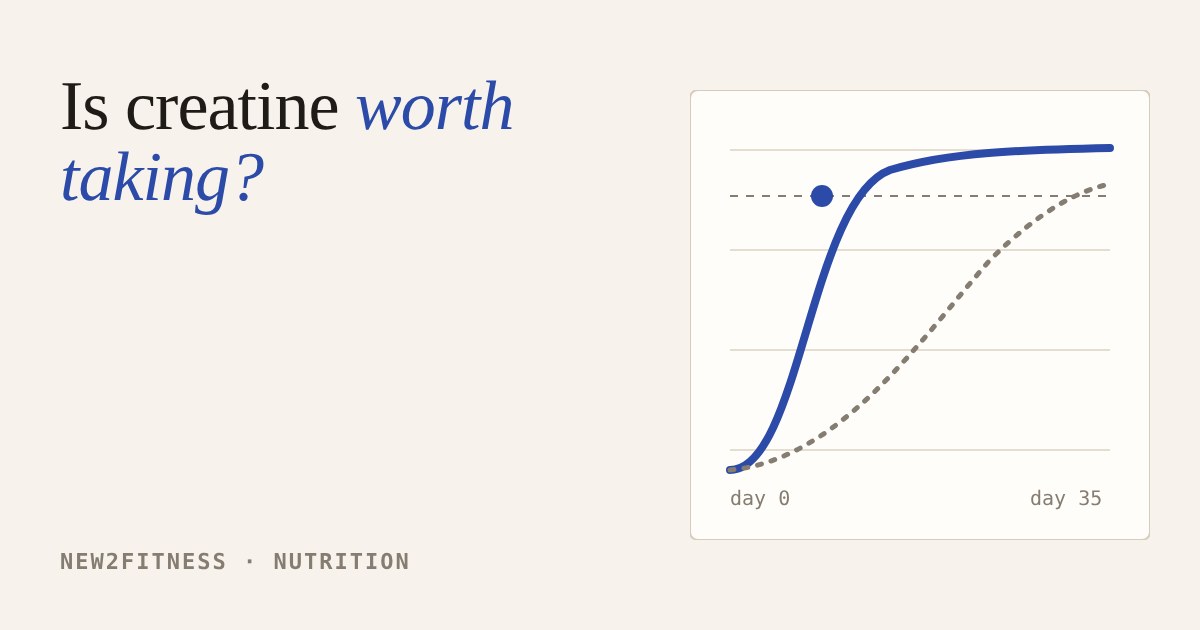
Try it below. Slide the daily dose and switch loading on or off. The curve is an illustration shaped to match those published timelines (about 28 days at 3 g, about a week when loading), not a measurement of your own body.
Two things stand out. Pushing the dose to 10 grams barely speeds things up, because your muscles can only hold so much. And at 3 to 5 grams a day, one month of powder costs very little, which is why the product matters less than people think.
Over the first week or two the scale may go up by one to two kilograms. That is mostly extra water held inside the muscles, not fat, and it is not a sign something is wrong. Some people get stomach discomfort from large single doses; splitting the dose or taking it with food usually helps. Creatine does not replace training, sleep or enough protein. Food first: if you already eat meat or fish, you get a little from your plate, and people who eat no animal products tend to start with lower stores.
Creatine has been studied for decades in healthy adults at these doses with no consistent safety problems. That said, it is not for everyone. If you have kidney problems, take regular medication, are pregnant or breastfeeding, or are under 18, talk to a doctor before you start. This guide is general information, not medical advice.
You are buying one ingredient, and the label should say creatine monohydrate and little else. Fancy forms cost more without a track record to match. Past that, a few things matter:
Affiliate links, marked sponsored. We may earn a commission at no extra cost to you. Examples that match this guide, not tested reviews. Prices checked 19 Oct; every shop is on each product page.
A small tub of plain creatine monohydrate, enough for about a month. A low-cost way to try it before committing to a bigger bag.
100 g · 29 servings · Unflavoured
The same plain monohydrate in a bigger bag, which brings the cost per serving down if you take it daily for months.
500 g · 147 servings · Unflavoured
Made with a branded, high-purity raw material. It costs more per serving and is optional; plain monohydrate does the same job for most people.
250 g · Creapure brand · Unflavoured
