Cardio · Tool · 3 min ·
Can you run for 30 minutes? Build your own run-walk plan and see nine weeks
Most beginners quit running because they start too fast and feel awful. Run-walk plans fix that: short running blocks with walking breaks, a little longer each week.
Set the longest you can run comfortably and your walking break, then step through nine weeks and see what each session looks like.
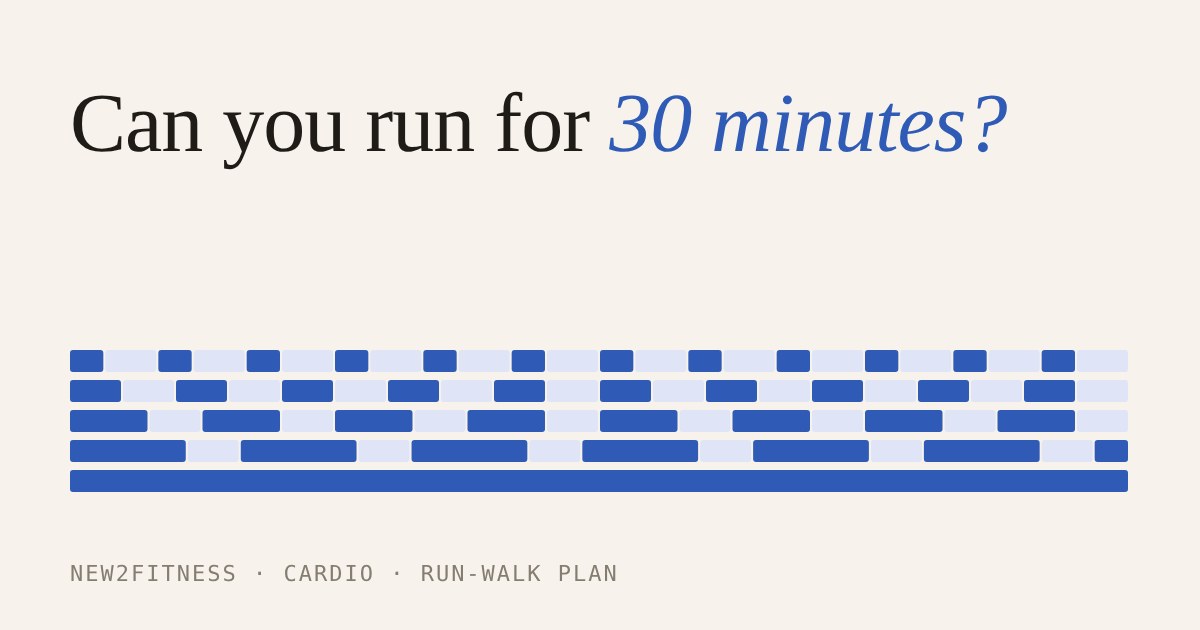
Most people who quit running in the first month do it for the same reason: they start by jogging until they are out of breath, feel awful, and decide running is not for them. The fix is not more willpower. It is shorter running blocks with walking breaks in between, and then making the blocks a little longer each week.
Why run-walk works
Your heart and lungs adapt quickly to new effort, but your tendons, bones and calf muscles adapt more slowly. Walking breaks keep the effort low enough to talk, spread the load on your legs, and let you finish a session feeling that you could have done a bit more. That feeling is what gets you out the door again on the next planned day.
Popular beginner programmes use this idea: they run for about nine weeks, three sessions a week, and start with short runs separated by walking. The plan below follows the same idea, but you choose the starting point.
Build your plan
How to read it
The bar is one session. Blue is running, pale blue is walking. Early weeks look mostly pale on purpose. Run at a pace where you could say a full sentence, even if that pace feels slower than walking briskly. If you cannot talk, slow down or take the break early.
Rules that keep it working
- Three sessions a week, with a rest day between. Your legs need the day off to adapt.
- Repeat a week if it felt hard. Nothing is lost by taking ten or twelve weeks instead of nine.
- Add a five-minute brisk walk before and after. It warms you up and lets your breathing settle.
- Do not jump two weeks at once. If you skip a week, go back one step rather than forward.
Who this is not for
This is a general example, not medical advice. If you are returning after an injury, are pregnant, have heart, joint or breathing problems, or get chest pain, dizziness or sharp pain when you run, check with a doctor or physio before starting. Mild muscle tiredness is normal; pain that gets worse as you run is a reason to stop.
Where to go next
When you can run for 30 minutes, you do not have to speed up. Keep the same easy effort and add a little time. Our guides on the talk test and on building weekly running by small steps explain how to do that without piling on injuries.