Cardio · Explainer · 4 min ·
Do you need to cool down after cardio? Pick your session and see what a few easy minutes do
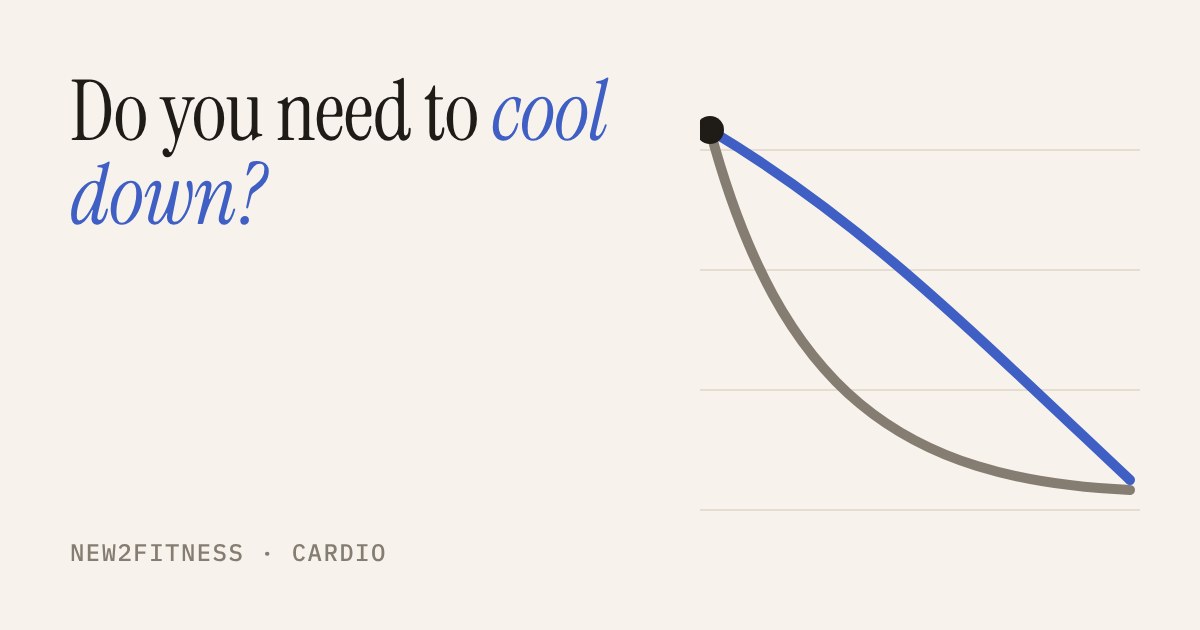
Is a cool-down after cardio essential, or just a habit? Pick your session and the number of easy minutes, and watch a sketch of how your heart rate comes down whether you stop or ease off.
A 2018 review found most studies show no clear effect on tomorrow's soreness, so it is optional. It can still make the first minutes after hard effort feel calmer.
You finish a run, stop dead, and wonder if you should have walked it off first. Gym posters say a cool-down is essential. Your legs say they want to sit down. Which one is right?
Short answer: a cool-down is optional, not essential. It will not stop you being sore tomorrow. What it can do is make the first few minutes after hard effort feel calmer. Here is what that means, and how to decide for your own session.
What a cool-down is
A cool-down is a few minutes of easy movement straight after your main effort: walking after a run, spinning gently after a bike ride, a slow jog after intervals. The opposite is a passive cool-down, where you simply stop and sit or stand. Studies compare those two.
Try it: what happens when you stop?
Pick a session and decide how many easy minutes you add. The chart is a sketch of the usual shape, not measured data: your heart rate falls fastest in the first minute or two after you stop, and the harder you worked, the more there is to come down.
What the research found
A 2018 review in Sports Medicine by Bas Van Hooren and Jonathan Peake gathered the studies on cool-downs. Most of them found no clear effect on muscle soreness, even when soreness was checked for several days afterwards. Few studies looked at injuries, so nobody can say a cool-down protects you, and nobody found that it causes harm. Effects on the next session were small and mixed, and the review's author sums it up as most likely none.
One thing the studies do agree on: easy movement clears lactate from your blood faster. That sounds useful, but lactate returns to normal within a couple of hours anyway, so it does not change how you feel tomorrow.
Many athletes also say a cool-down feels better, and that counts. If a few minutes of walking makes you more likely to keep exercising, it has done its job, even if the benefit is mostly in your head. The evidence is thinner on the heart and breathing side, so we won't promise more than that.
When a cool-down is worth it
- After hard effort. If you finish breathless, walking for a few minutes is a comfortable way to let your breathing settle before you sit down.
- If you feel lightheaded when you stop suddenly. Keep moving gently until it passes. If it happens often, or you feel chest pain or faint, talk to a doctor before your next session.
- If you like it. A calm ending is a fine habit to build.
When you can skip it
- After an easy session. An easy walk or jog is already close to a cool-down.
- When you are short on time. Skipping it will not undo your workout. Put those minutes into the next session instead.
- Hoping to prevent soreness. The research does not back that up, so don't count on it.
A simple rule
Ask what you want from the next five minutes. If you want to feel settled before you sit down, ease off. If you want to protect tomorrow's legs, a cool-down is not the tool: sleep, steady progress and not jumping up too fast in training do far more. And if you are short on time, you can skip it without guilt, because most of what makes you fitter happened during the session itself.
How to do one, if you want to
Keep it simple: 3 to 10 minutes of easy movement, at a pace where you could chat comfortably, using the same kind of movement as your session. Walk after a run, pedal gently after a ride. Then stretch if you like, or just carry on with your day.
This guide is general information, not medical advice. If exercise gives you pain, dizziness, or chest tightness, or you have a heart condition, check with your doctor before changing what you do.