Budget€39.95
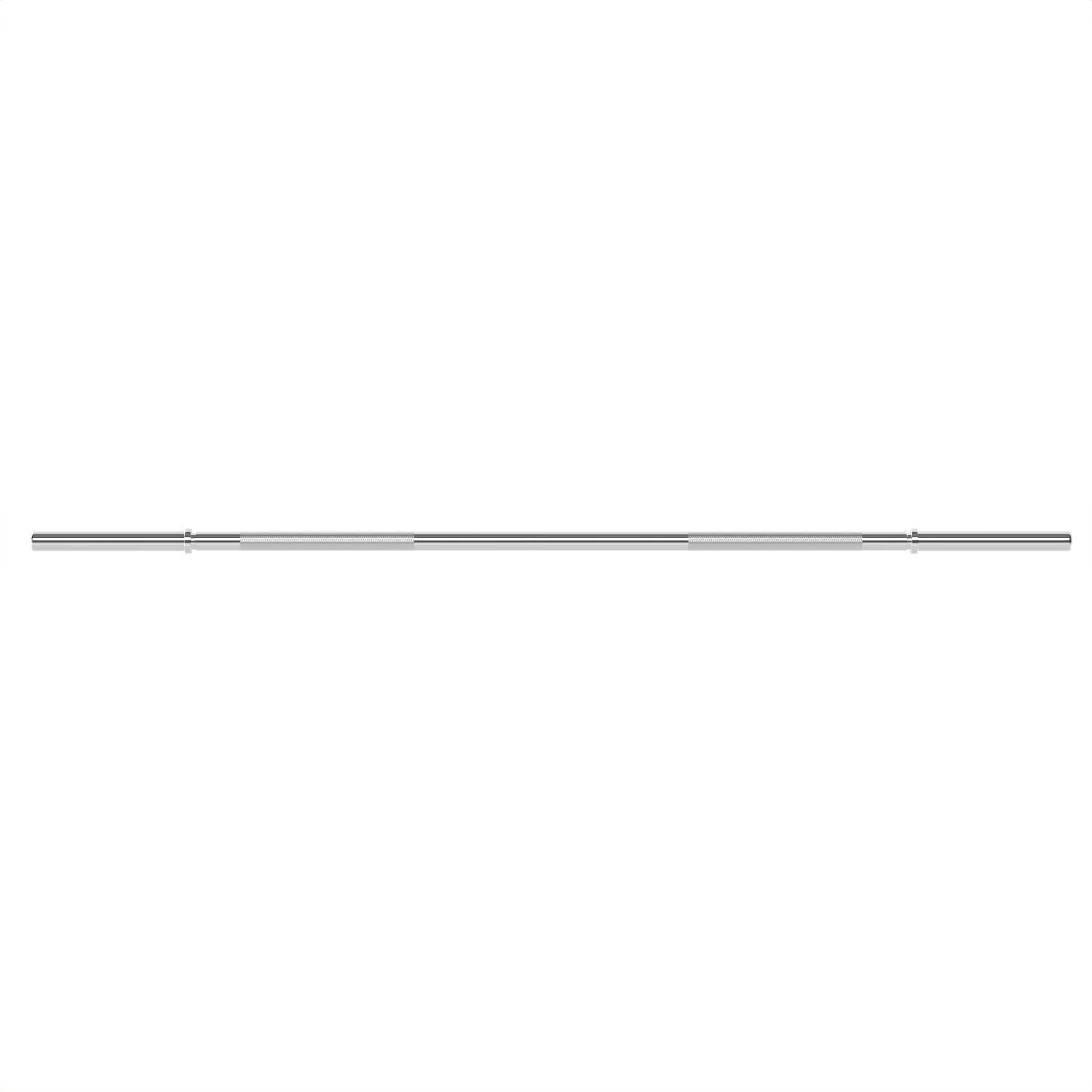
Halterstang 30 mm - Focus Fitness - 150 cm | 250 kg
A short standard bar for light technique work, curls and lunges. It only takes plates with a 30 mm hole, so plan your plates with it.
30 mm sleeve · 150 cm · 7 kg bar
Home Gym · Guide · 4 min ·
A barbell is not one thing: standard bars have a 25–30 mm sleeve and Olympic bars have a 50 mm sleeve, and plates only fit one of them. Load three example bars with your own target weight and see how many plates fit, how the bar's own weight changes your starting load, and which bar you can grow into.
Then see what to look for at each budget, with example bars below.
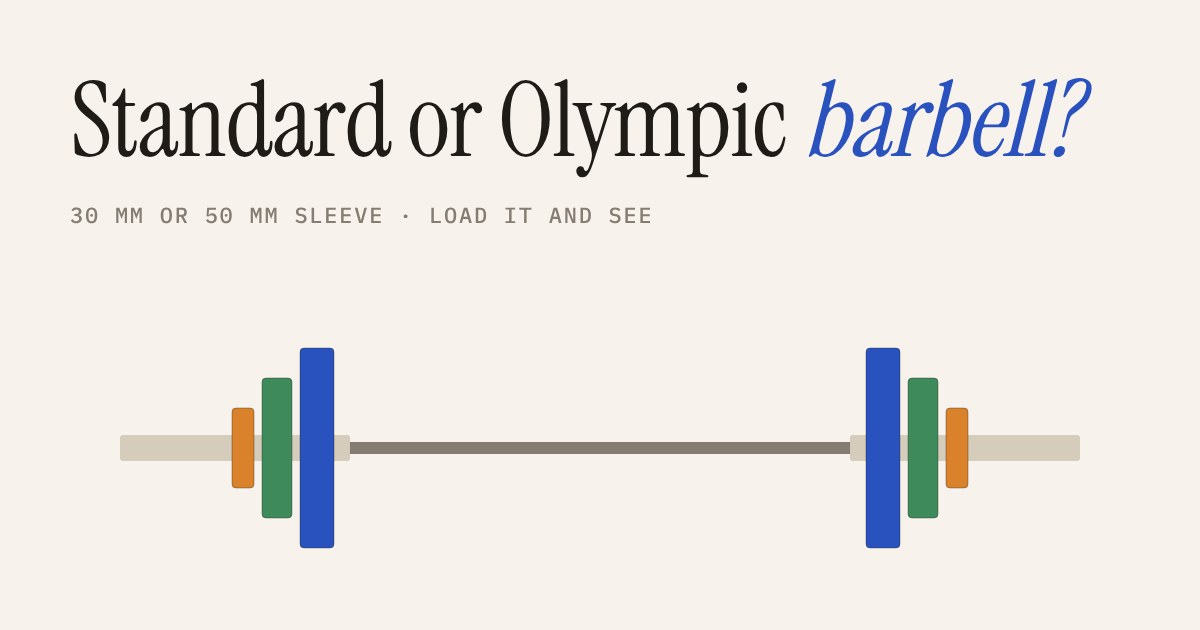
A barbell looks like one object, but there are two common kinds, and they do not share plates. Pick the wrong one and your plates won't fit, or you'll outgrow the bar in a few months. This guide shows you what each type means for the weight you plan to lift, so you can choose before you spend.
The part of the bar where plates slide on is called the sleeve. On a standard bar the sleeve is about 25–30 mm thick. On an Olympic bar it is about 50 mm. Plates have a hole matched to one of those sizes, so plates for a 30 mm bar will not go on an Olympic bar, and the other way round.
Olympic bars are also built differently. Their sleeves spin freely, the shaft is usually 28 mm thick on men's bars, and they are made for heavier loads. A full-size Olympic bar is about 2.2 m long and weighs 20 kg (some budget ones are a little lighter). A standard bar is often shorter and lighter, around 7–10 kg.
Try the standard bar and drag to 100 kg. The bar itself holds that on paper, but you will need a lot of plates stacked on a short sleeve. Now try the Olympic bar at the same weight. The bar weighs more, but the sleeves are longer and the plates are bigger, so loads that feel crowded on a standard bar look comfortable on an Olympic one.
A beginner starts light. In the first months most people use anything from the empty bar to a few tens of kilograms, and add small steps often. That is exactly where a standard bar is fine. The bar's own weight is part of your load, so a 20 kg Olympic bar is a heavy starting point for some people, while a 7 kg bar is a gentler one.
Think about where you expect to be in a year or two. If you might press, squat or deadlift well over body weight, or you want to train with other people's gym plates, an Olympic bar will not need replacing. If you want light technique work, curls or lunges, a standard bar is enough and costs less. Plates are a separate cost and are often the larger part of the spend, so price the bar and a plate set together.
A heavy bar is only useful if you can put it down safely. For squats and bench press, you want a rack or stands with safety arms set just below the lowest point of the lift, so you can leave the bar if a rep fails. Always use collars so plates cannot slide off. If you have pain, an injury, or a health condition, or you are pregnant, check with a doctor or physio before lifting heavy. Start with the empty bar and learn the movement before adding plates.
Affiliate links, marked sponsored. We may earn a commission at no extra cost to you. Examples that match this guide, not tested reviews. Prices checked 15 Oct; every shop is on each product page.
A short standard bar for light technique work, curls and lunges. It only takes plates with a 30 mm hole, so plan your plates with it.
30 mm sleeve · 150 cm · 7 kg bar
A full-length Olympic bar that takes standard 50 mm plates, so it can grow with you. Use it with a rack with safety arms and collars.
50 mm Olympic · 220 cm · 17.5 kg bar
A heavy-duty Olympic bar with a high listed load, for someone who expects to lift heavy for years. Overkill for the first months.
50 mm Olympic · 220 cm · 20 kg bar

