Budget€19.95
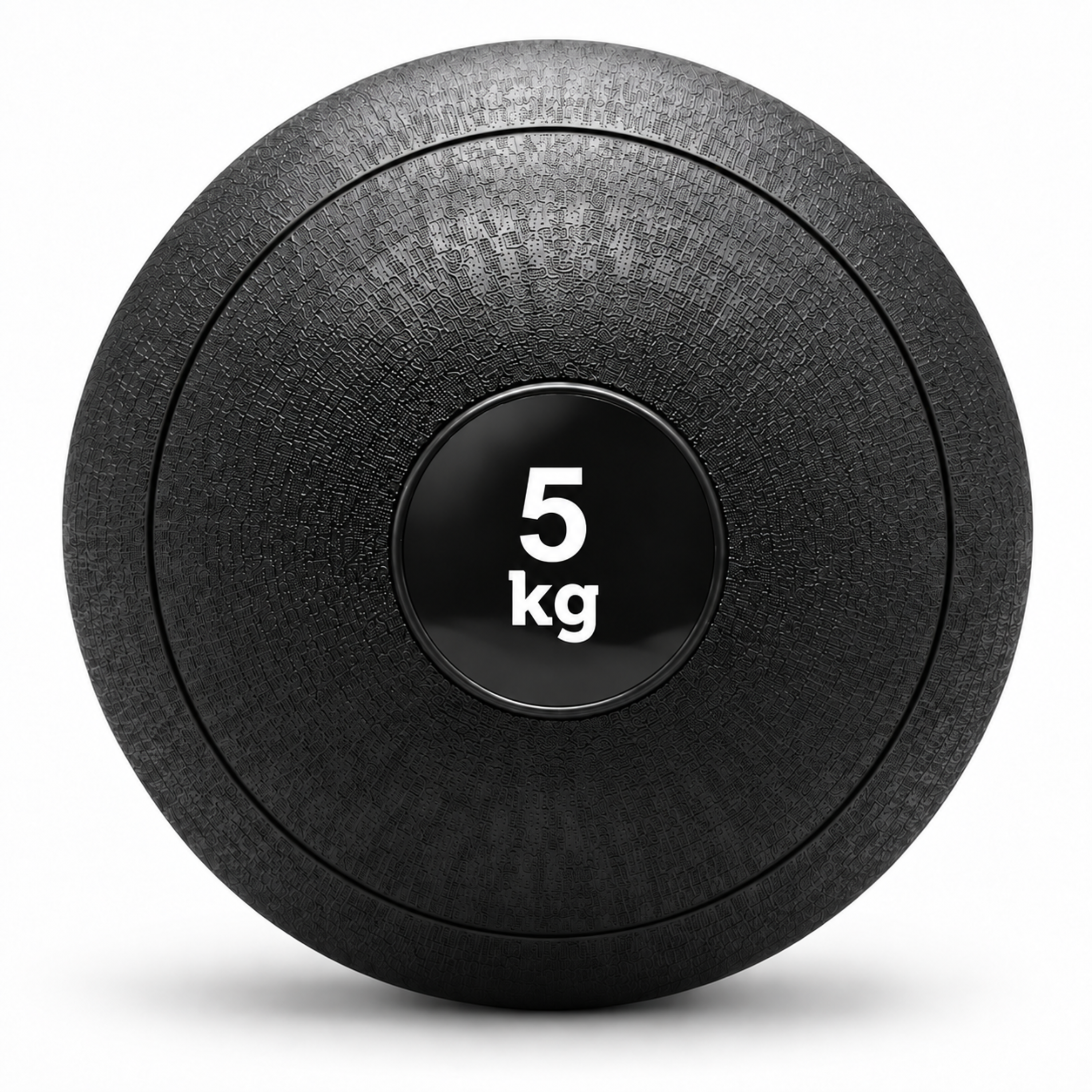
Slam Ball - Focus Fitness - 5 kg
A light ball for learning the movement. At 5 kg you can slam fast and keep your form clean, which suits someone new to the move.
5 kg · Slam ball · Plain shell
Home Gym · Explainer · 4 min ·
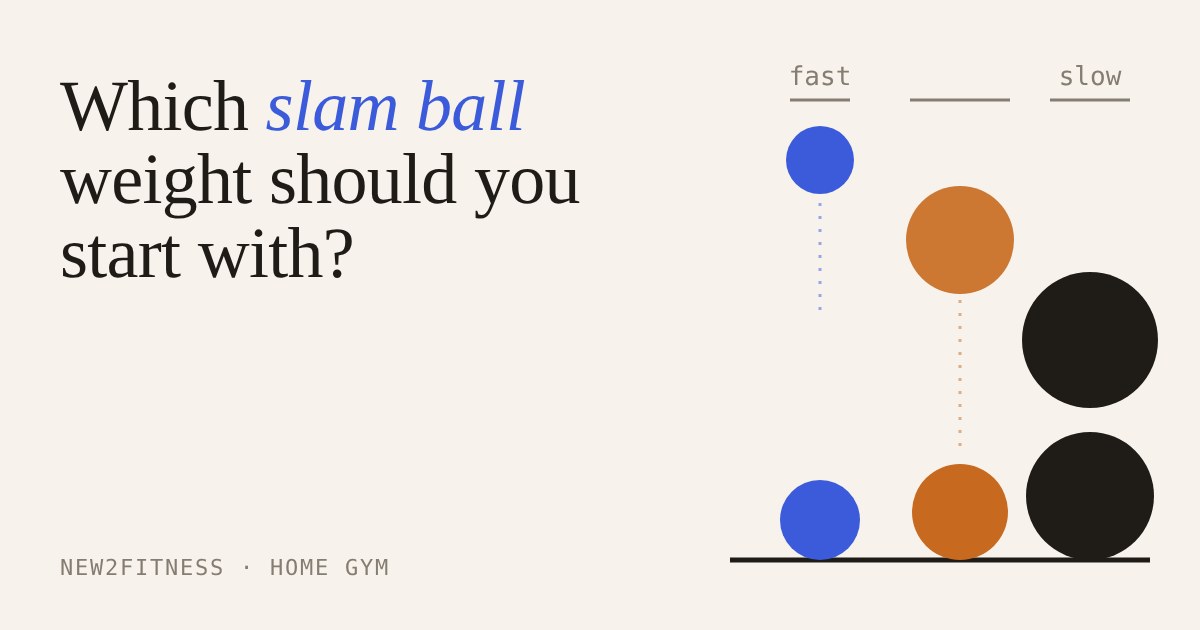
A slam ball is a tough, non-bouncing ball you throw at the floor, and the weight you pick matters more than most people expect. Heavier is not better: the heavier the ball, the slower you can move it, and the faster, cleaner reps are what make a slam worth doing.
Pick your move and your experience, slide the ball weight, and watch speed and work per rep change. You'll see a "fast and clean" range to shop in, plus a simple check you can use at home.
A slam ball is a weighted ball with a tough shell that is built to be thrown hard into the ground. Unlike a medicine ball, it is designed not to bounce: it lands, stays put, and you pick it up for the next rep. That makes it a popular, cheap bit of home-gym kit. You lift it overhead, slam it down, squat to pick it up, repeat. A few minutes of it gets your heart rate up and uses your whole body.
The one decision you actually make when buying is the weight. Most slam balls come in a long ladder, from 1 kg to 15 kg or more, and the price climbs a little with each step. It is tempting to think heavier means better. It does not, and there is a simple reason why.
A slam is a throw. How hard you throw something depends on how heavy it is, and how fast you can move it. Those two pull against each other: the heavier the ball, the slower you can move it. A ball that is far too light feels like nothing, so you get little out of it. A ball that is too heavy turns into a slow, grinding lift, and you start to cheat with your back to get it overhead.
Somewhere in between, the ball is heavy enough to feel like work but light enough that you can still whip it down fast and keep your form. That is the range to shop in, and it is different for each move and each person. Try it below.
The solid line is how fast you can move the ball. It drops as the weight goes up. The dashed line is a rough measure of how much work each rep asks of you (weight times speed). It rises, then flattens: past a point, a heavier ball adds weight but costs you the speed, so the rep does not get meaningfully harder in the way you want. The blue band is a sensible place to start, because you still get a quick, snappy slam.
Notice how the band moves. A side slam asks more of your trunk and shoulder, so its comfortable weight is lower than an overhead slam. Someone new to training lands lower than someone who has trained for years. There is no official standard for this, so treat the numbers as a way to see the pattern, not as a prescription.
Whatever the chart says, trust your own reps. A ball is the right weight for now if the last slam of a set is about as fast as the first, you can keep your back flat and your ribs down when you pick it up, and you finish a set tired in the legs and lungs rather than strained in the lower back. If you have to heave the ball up with a rounded back, it is too heavy today. Drop a size. And if you have back, shoulder or heart problems, or you are unsure whether a move is right for you, check with a doctor or physio before you start.
If you want to throw at the floor, get a slam ball. A medicine ball usually has a softer outer surface and does bounce, which suits catching and passing drills, but it is not made for repeated hard slams. If you only ever slam, you do not need both.
Affiliate links, marked sponsored. We may earn a commission at no extra cost to you. Examples that match this guide, not tested reviews. Prices checked 30 Oct; every shop is on each product page.
A light ball for learning the movement. At 5 kg you can slam fast and keep your form clean, which suits someone new to the move.
5 kg · Slam ball · Plain shell
A mid-weight ball with a grip, in the range where many people stay quick and clean on overhead slams after a few months of training.
8 kg · PVC shell · Textured grip
A heavier ball for later, once 8 kg feels easy and your reps stay fast. Too heavy to start with for most people, but a sensible next step.
12 kg · PVC shell · Textured grip

