Budget€13.95
Power Band - Focus Fitness - Medium
One band from the middle of the maker's range. A sensible first step for arm, shoulder and row work, where a lighter band is usually enough.
Single power band · Medium step · Orange
Home Gym · Explainer · 3 min ·
A resistance band has no fixed weight: it pulls harder the further you stretch it, and its colour or name means different things at every brand. This guide lets you pick an exercise, a band step and your starting slack, then shows how the tension builds and whether that band suits the move.
You will see why arms and shoulders are happy with light bands while back and legs outgrow them, and what to look for at around €10 to €30.
Walk into a shop and every loop resistance band looks the same except for the colour. Medium, strong, very strong: the names say nothing about how heavy it will feel, and the colours differ from one brand to the next. So how do you pick one?
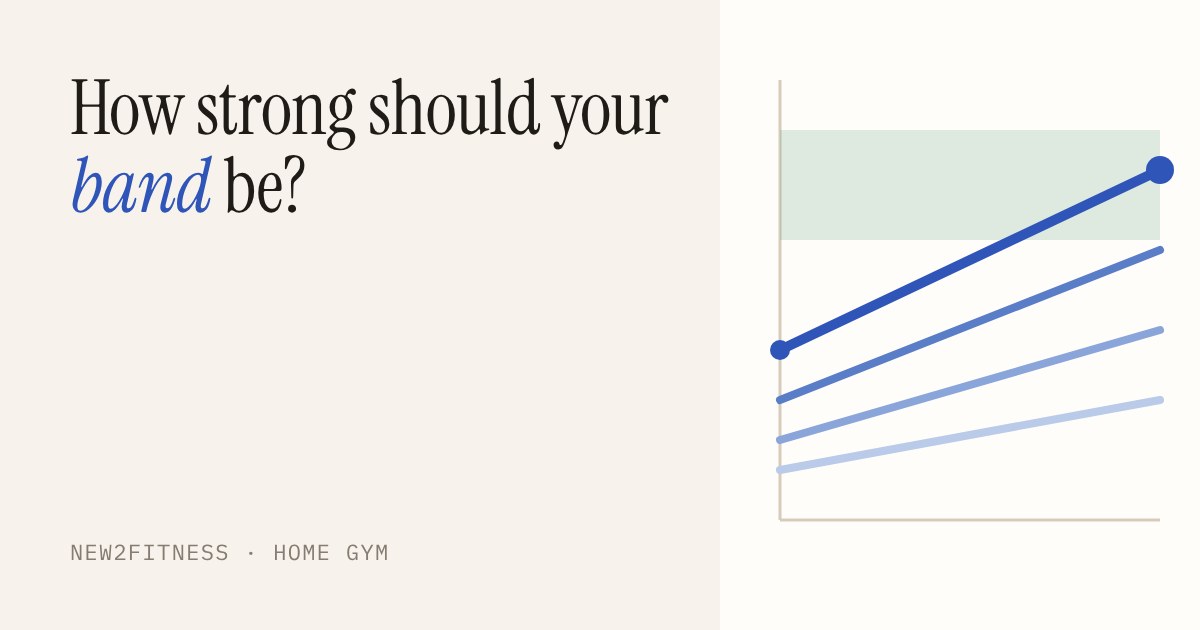
The first thing to know is that a band has no fixed weight. A dumbbell is 8 kg wherever you hold it. A band pulls harder the further you stretch it. A lab test of coloured therapy bands found the pull rose steadily and in proportion as the bands were stretched, and that the heaviest colour pulled over five times as hard as the lightest. So the same band can feel easy or brutal depending on how you stand, where you hold it and how far you move.
Two things move the result. The first is the band step. Each step up multiplies the pull. The second is your slack: how stretched the band already is before you start. Stand a few steps further from the anchor and every rep gets harder, with no new band to buy.
The third thing, which the picker hints at, is the muscle. Small muscles such as shoulders and arms are happy with light and medium bands. Big muscles such as your back and legs get through them fast. That is why one band rarely covers a whole routine.
For a beginner, mostly yes, with one big exception. In an eight-week trial in young women, training with elastic tubing improved isometric strength about as much as training with weights for rowing and back extension. The squat was the exception, where the weights group gained roughly twice as much. Bands run out for leg work first, because your legs are far stronger than any single loop.
The practical reading: bands are a good way to start, to train at home, to travel, and to work your back and shoulders. If you find yourself doubling bands for squats, you are probably ready for dumbbells or a kettlebell.
At the low end, around €10 to €25 per band, buy one or two steps and make sure the band is a continuous loop with a smooth finish and no visible seams. A medium step is a sensible first buy for arms, shoulders and rows.
If you can stretch the budget to around €25 to €30, a set of five steps covers every exercise in the picker. It costs about what two single bands do, and it saves you re-buying as you get stronger.
Whichever you pick, check the product page for the actual lengths and widths, and don't trust colour names. Brands rank their colours differently, so a green here may be a different step to a green there.
Affiliate links, marked sponsored. We may earn a commission at no extra cost to you. Examples that match this guide, not tested reviews. Prices checked 24 Oct; every shop is on each product page.
One band from the middle of the maker's range. A sensible first step for arm, shoulder and row work, where a lighter band is usually enough.
Single power band · Medium step · Orange
A heavier single band for bigger muscles like your back and legs, or for when the medium one starts to feel easy.
Single power band · Very Strong step · Red
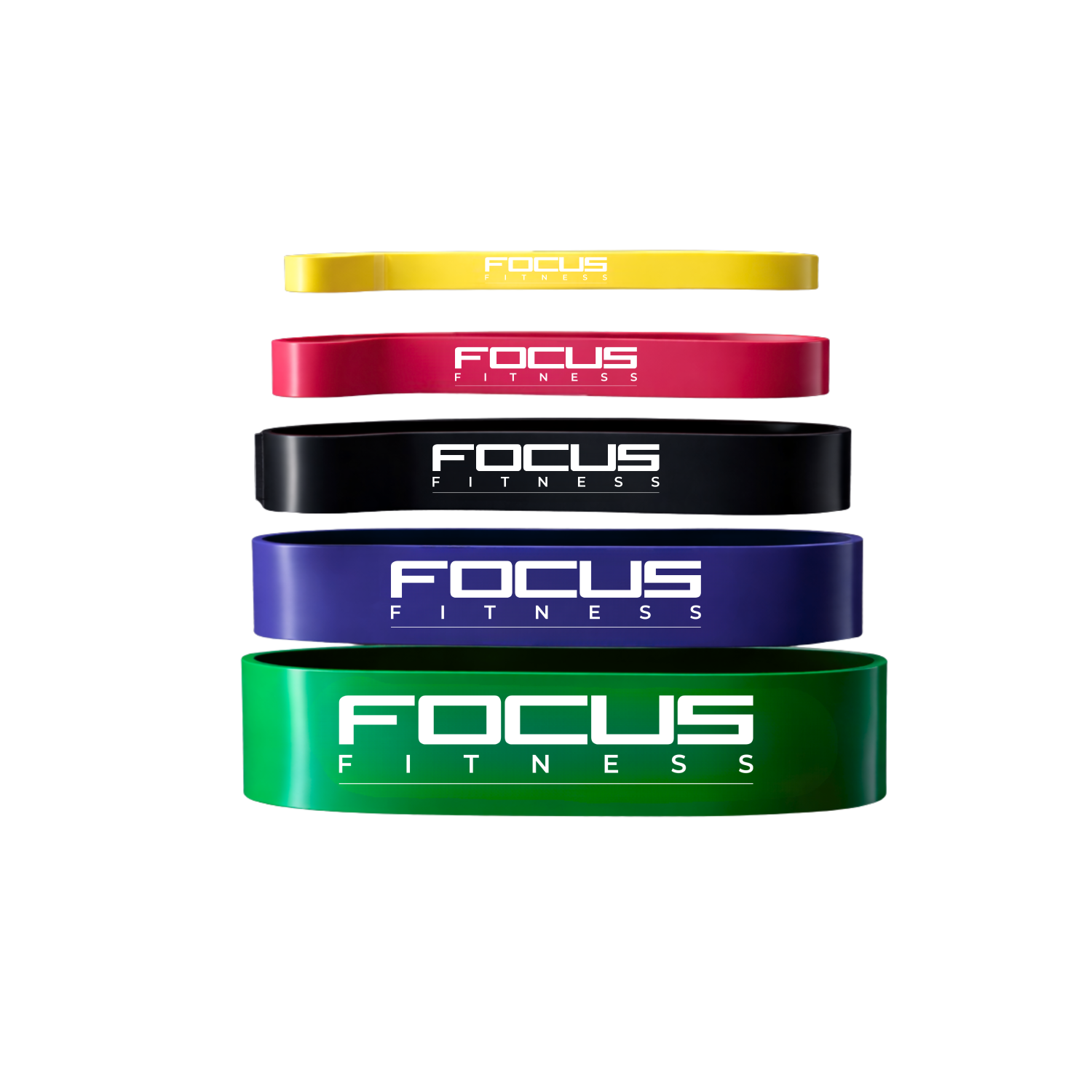
A whole ladder of steps in one box, so you can match the band to each exercise and keep progressing without re-buying.
Set of 5 power bands · Five steps · Multicolour