Budget€14.95
Speed Rope - Focus Fitness
A basic, low-cost speed rope. It is light and fast, so it suits you best once your timing is steady; check the listing for how the length is adjusted.
Speed rope · Steel · Lowest price here
Home Gym · Explainer · 4 min ·
Most jump ropes ship too long, and a rope that is the wrong length makes a beginner trip, hunch and give up. Set your height and your rope's length and see where the handles end up, then learn the one-minute stand-on-the-rope check.
You will also see how beaded, speed and weighted ropes differ, why a forgiving type is the better first rope, and what to check before you jump. This is not medical advice. If you have pain, an injury or a health condition, check with your doctor or physio first.
A jump rope is one of the cheapest bits of home-gym kit there is, and the easiest to get wrong. Most ropes ship long, because one length has to fit everybody. A rope that is too long catches the floor and slaps your feet. One that is too short pulls you into a hunch and snags on every jump. Either way a beginner decides "I'm just bad at this" when the rope is the problem.
The fix takes a minute. Below you can set your height and the length of your rope and see where the handles end up.
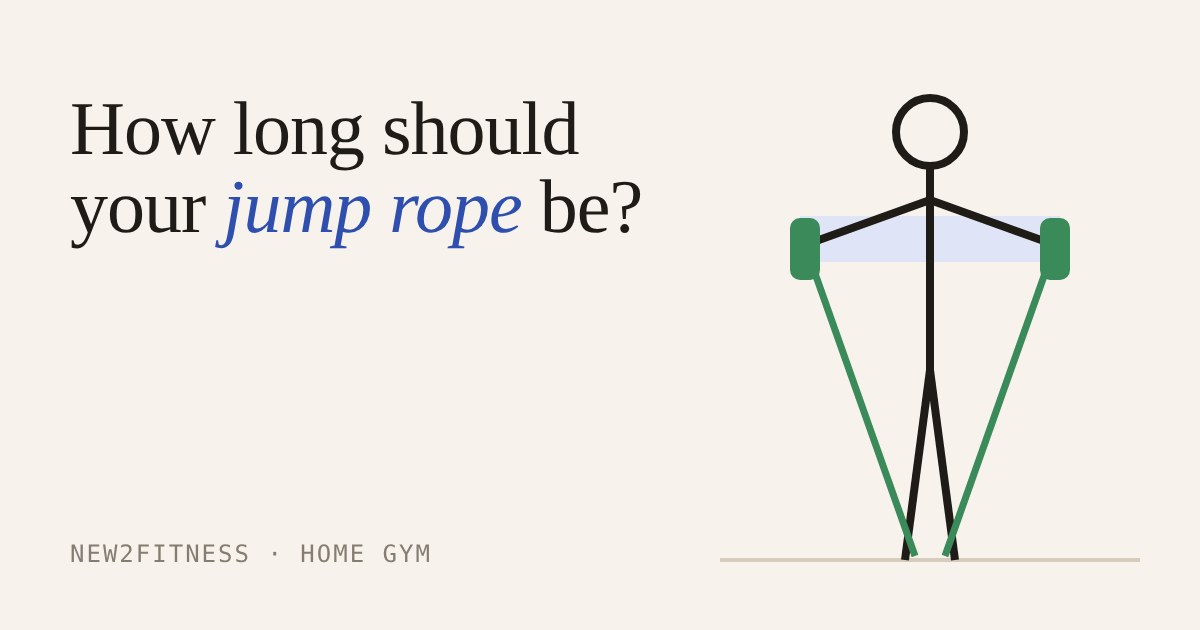
Stand with both feet on the middle of the rope, feet together. Pull the handles straight up until the rope is tight. Where the handles end up tells you everything:
If you have not got the rope yet, a handy rule of thumb is a rope about 90 cm (3 feet) longer than you are. The slider above uses that rule, with some room either side, because bodies and handles differ. It is a starting point, not a law.
Many adjustable ropes come with cable you cut to length, or have a clamp or screw at the handle. Trim a little at a time. You can always cut more, but you cannot add any back.
The material changes how the rope feels as much as the length does. Three types cover almost everything:
| Type | Feels like | Good for |
|---|---|---|
| Beaded | Slow and clear. You can feel and hear where the rope is. | Learning the rhythm; beginners; anyone who keeps tripping. |
| Speed (thin cable or PVC) | Light and quick, with little feedback. | Once your timing is steady; cardio intervals. |
| Weighted (heavier cord or handles) | Slower, more effort for your arms and shoulders. | Later on, when plain jumping is easy. |
For a first rope, a beaded or basic PVC rope is the forgiving choice. A fast, thin speed rope is a performance tool. It gives you almost no sense of where the rope is mid-air, so it tends to catch beginners out. Wait for it until you can string together a few dozen jumps.
Handles matter less than people think, but a handle that spins freely (ball bearings) stops the rope twisting around itself. Plain plastic ropes wear out quickly on rough concrete, so if you will jump outside or in a garage, look for a vinyl-coated steel cable and keep a spare cord.
You need a flat, firm floor with some give, such as a mat over a hard floor, a wooden floor or a rubber surface. Skipping on bare concrete is hard on your feet, and it chews up the rope. Leave enough room to turn the rope without catching a lamp or the ceiling: about arm's width on each side and clear space above your head. Jumping in trainers with decent cushioning helps more than any rope feature.
Jumping is an impact exercise. If you have pain or an injury in a foot, ankle, shin, knee, hip or back, are pregnant, or have a heart or other health condition, check with your doctor or physio before you start. Begin with short rounds of 20 to 30 seconds with plenty of rest, and stop if something hurts.
Affiliate links, marked sponsored. We may earn a commission at no extra cost to you. Examples that match this guide, not tested reviews. Prices checked 1 Nov; every shop is on each product page.
A basic, low-cost speed rope. It is light and fast, so it suits you best once your timing is steady; check the listing for how the length is adjusted.
Speed rope · Steel · Lowest price here
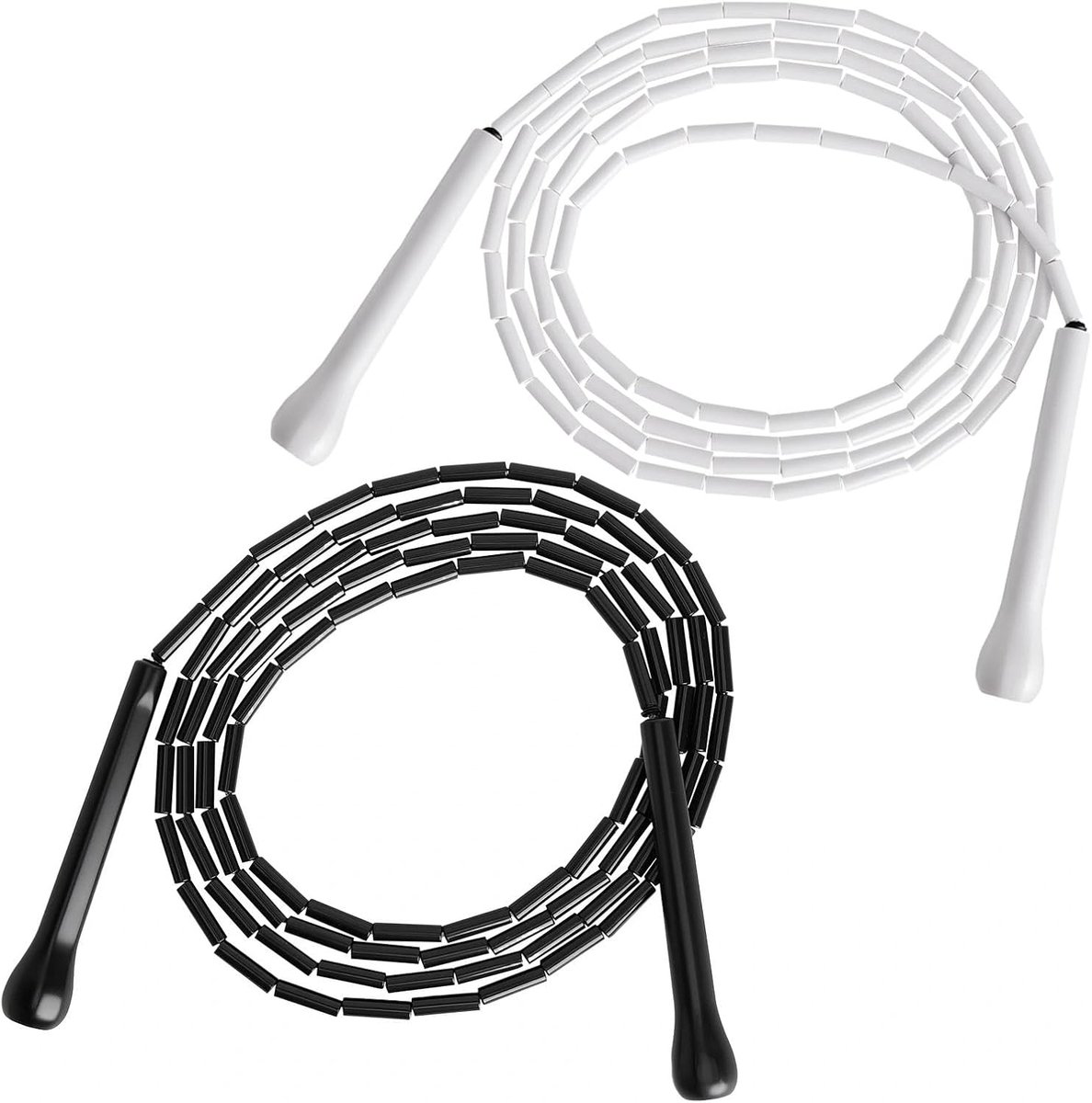
Beads let you feel and hear where the rope is, which makes it the forgiving type for learning rhythm. Two ropes come in the pack, so it is easy to share.
Beaded · 2.8 m · Adjustable · 2 ropes
Bearings keep the rope spinning smoothly as you speed up, and the spare cord covers the wear that comes from hitting the floor.
Ball bearings · Wooden handles · Spare cord · Adjustable