Anchor€19.95
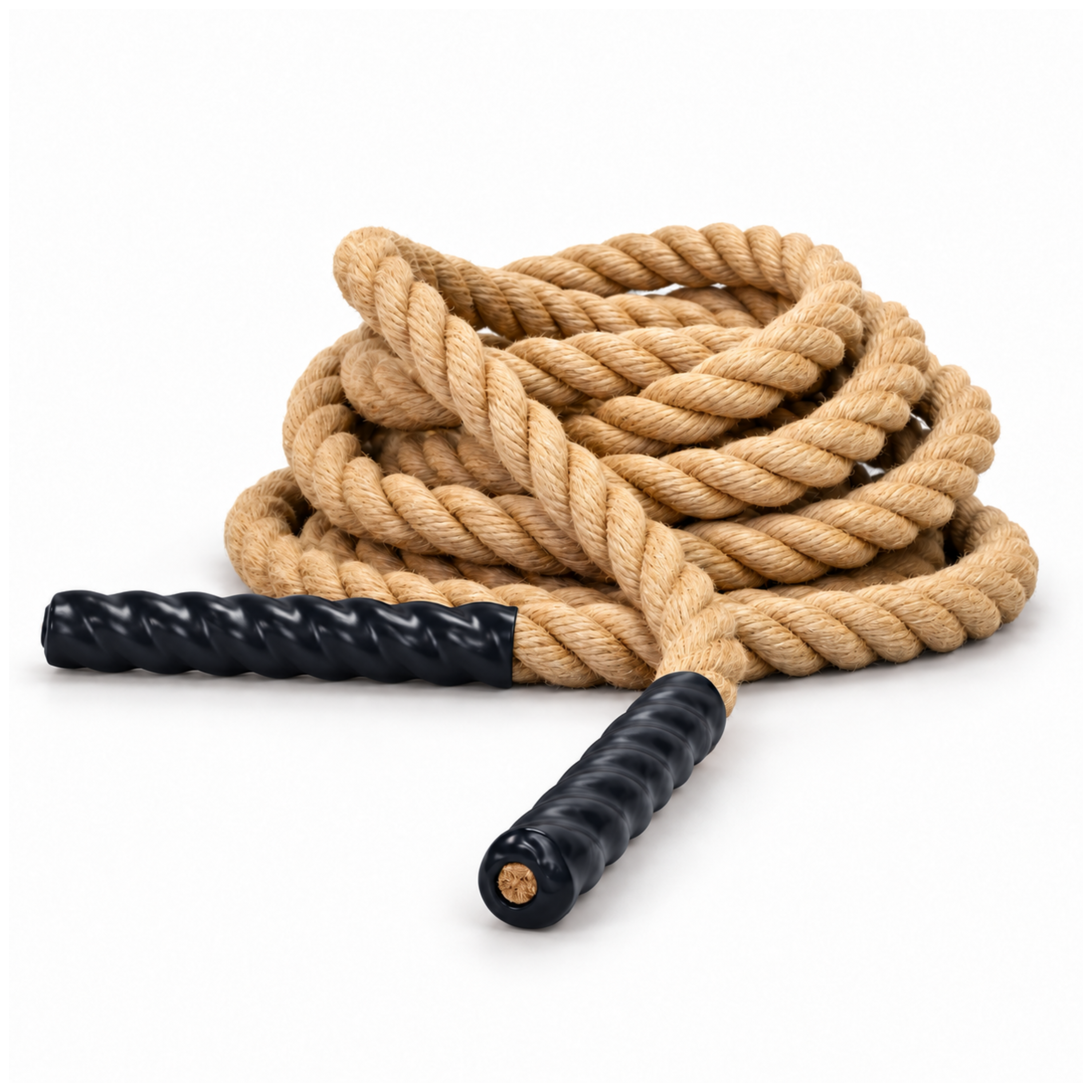
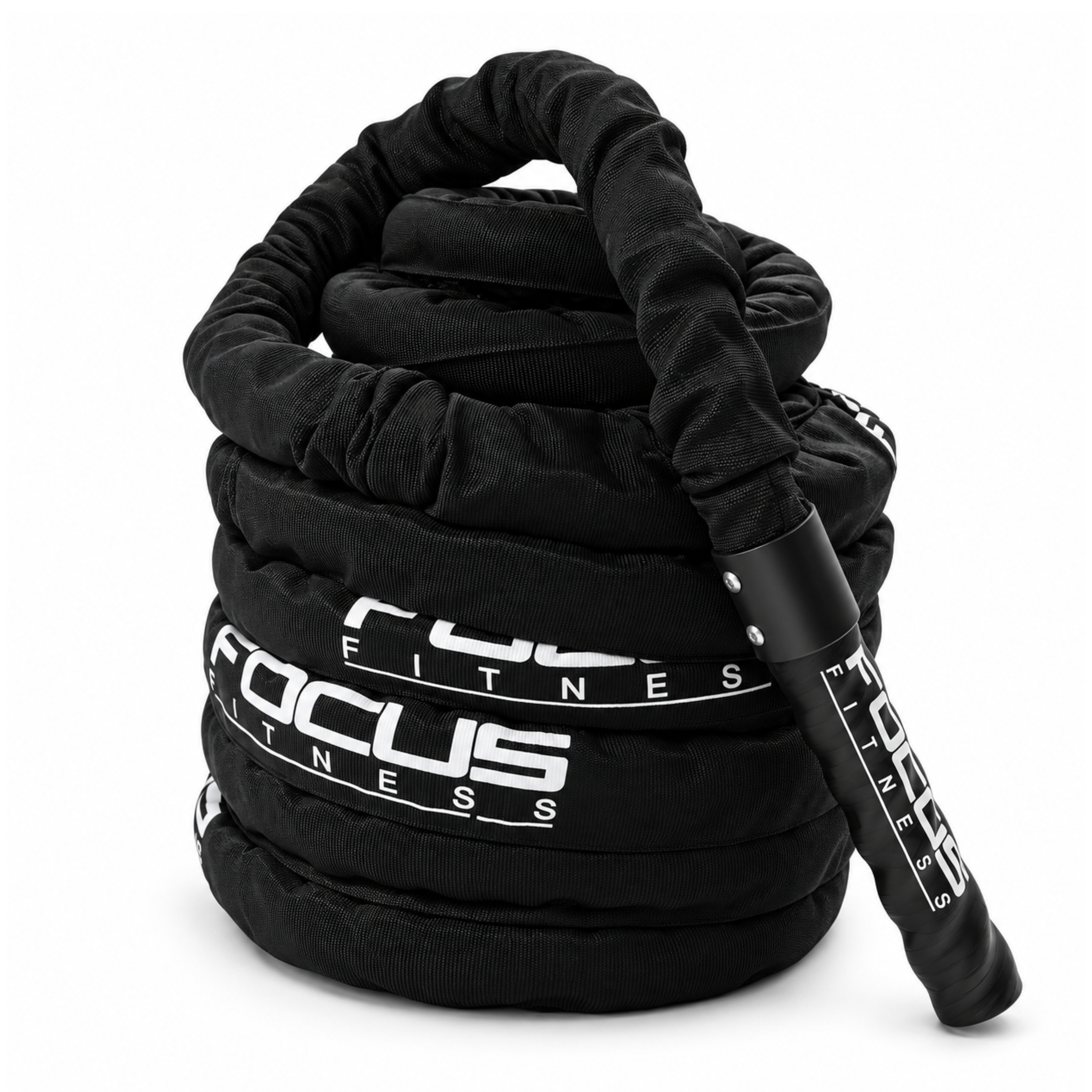
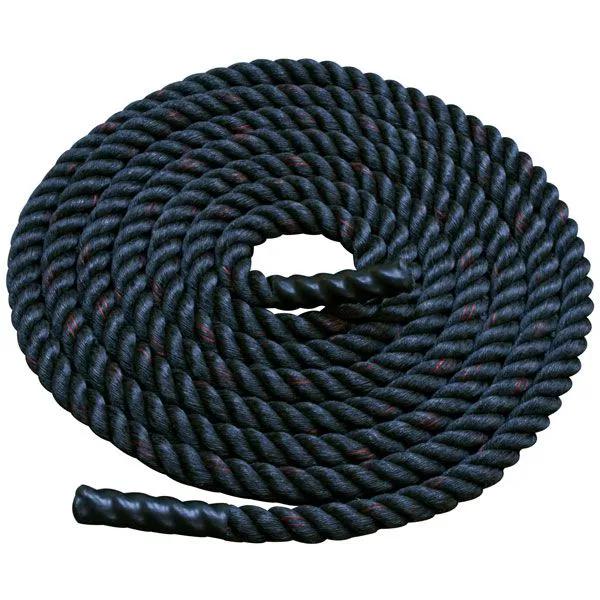
Focus Fitness Grondpin - Battle Rope
A rope needs something solid to loop around. This is a ground pin made for battle ropes, a useful add-on if you have no post or rack upright.
Steel ground pin · 1 kg · Holds the rope in place
Home Gym · Explainer · 3 min ·
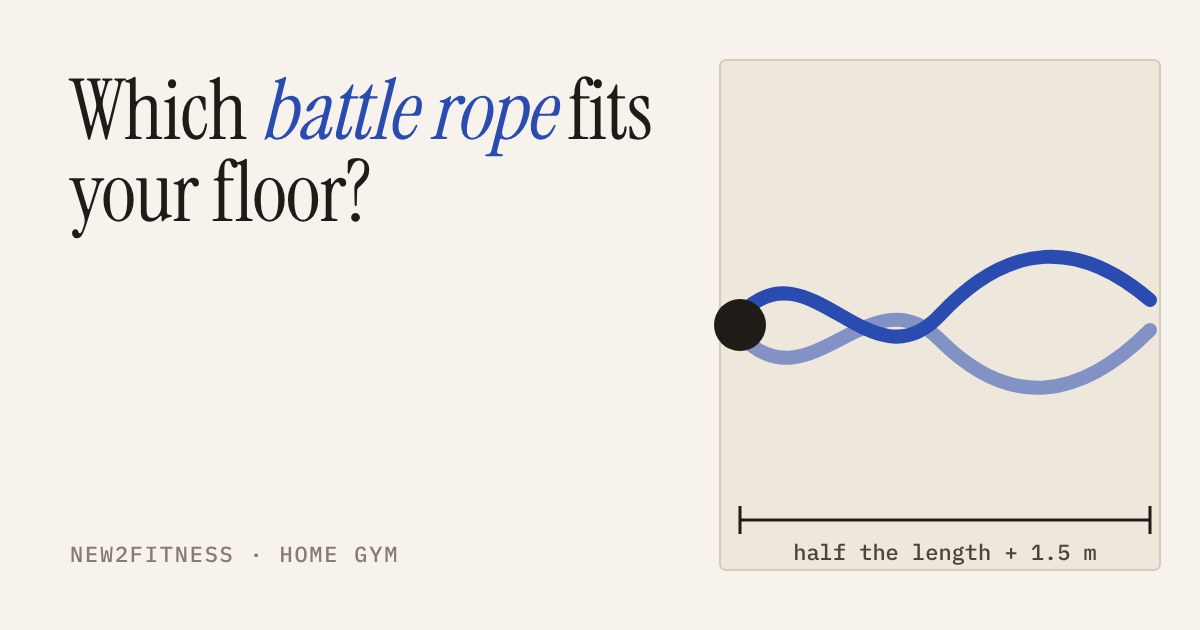
A battle rope looks simple, but the length and thickness you buy decide whether it fits your room and whether you can hold on for a full set. The rope loops around an anchor at its middle, so you need about half its length plus 1.5 m of clear floor.
Drag your floor length and pick your goal to see which standard rope (9, 12 or 15 m; about 4 or 5 cm thick) fits, then see a few example picks at different budgets.
A battle rope looks simple: a heavy rope, one anchor, and some waves. But the first choice you make when buying one, how long and how thick, decides whether it fits your room and whether you can actually hold on for a full set. Both are easy to get wrong by a size.
You don't tie a battle rope to the anchor at one end. You loop it around the anchor point at its middle, so two strands run out towards you and you hold one end in each hand. A 15 m rope is therefore two 7.5 m strands, and the waves travel along each of them.
Space is where it matters. Half the rope's length is only the start: you also need room to stand, to step back a little, and for the waves to settle. A common rule is half the length, plus about 1.5 m. Use the picker below to see what your floor allows.
Battle ropes usually come in three lengths: about 9 m, 12 m and 15 m (30, 40 and 50 feet). Longer ropes are heavier, but the waves are bigger and smoother, which many people find easier to keep going. A 9 m rope is the sensible choice when space is tight. Much shorter than that and the waves die out too fast to be a good workout.
If your space allows several, the middle length is a calm place to start. A heavy 15 m rope is a lot to swing for a first session.
Most ropes are about 3.8 cm or 5 cm thick (1.5 or 2 inches). A thicker rope weighs more and is harder to hold, so grip tires first. For intervals and first-timers, the thinner rope is easier to control. The thicker one suits people who want grip and strength work, and who have the hands for it. Anything thicker than 5 cm is overkill for almost everyone.
Weight also differs between makers, even at the same length and thickness, so check the listed weight rather than assuming.
The rope is only as good as what holds it. A sturdy post, a heavy rack upright with the rope looped around it, or a ground anchor that screws or bolts into the floor all work. A loose chair or a light dumbbell does not: it will move, and so will the rope. If you train in a flat, check what the floor and walls can take, and keep a clear zone around you. Slamming also makes noise, so think about neighbours.
If you have pain, an injury, a heart condition or you are pregnant, ask a doctor or physio before starting high-intensity work like this.
Affiliate links, marked sponsored. We may earn a commission at no extra cost to you. Examples that match this guide, not tested reviews. Prices checked 3 Nov; every shop is on each product page.
A rope needs something solid to loop around. This is a ground pin made for battle ropes, a useful add-on if you have no post or rack upright.
Steel ground pin · 1 kg · Holds the rope in place
The shortest common length, which suits small spaces. The thinner 4 cm rope is the easier one to grip.
9 m · 4 cm thick · 6 kg
The longest common size, for when you have about 9 m of clear floor. Same easy-to-grip thickness, with bigger waves.
15 m · 4 cm thick · 8 kg
A 15 m rope from a commercial-gym brand. It costs far more than a basic rope of the same size, so it is mainly for people who want that make.
15 m · 4 cm thick · 10 kg