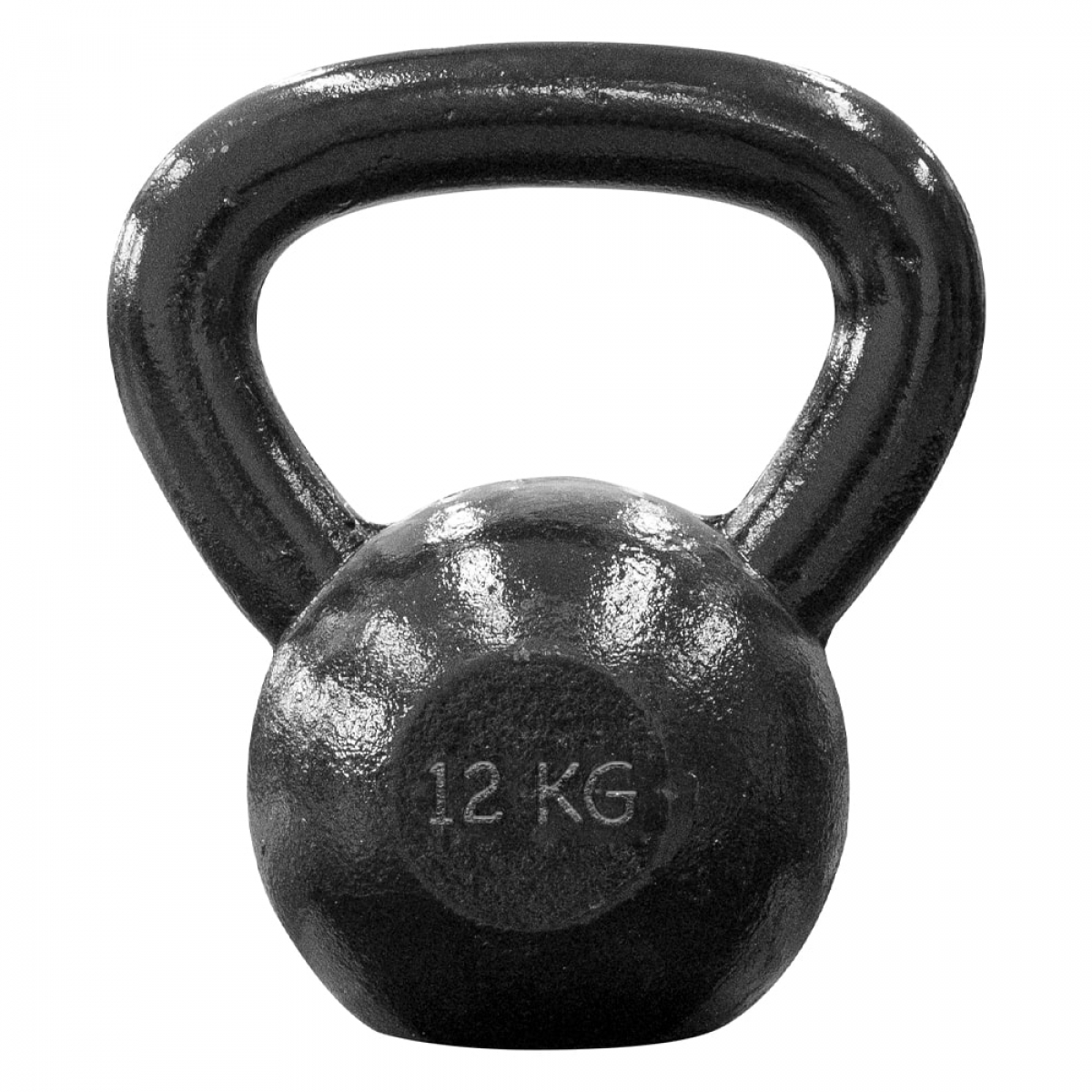
Budget€29.95
Kettlebell - Focus Fitness - 8 kg - Gietijzer
A light solid bell for learning the hip hinge, goblet squat and swing, and still useful later for presses and warm-ups.
8 kg · Cast iron · Single weight
Home Gym · Guide · 4 min ·
Kettlebells come in steps of about 4 kg, so your first purchase matters: too light and you outgrow it in weeks, too heavy and you learn the moves badly.
Use the picker to see which weight suits your starting point for squats, swings, presses and get-ups, then decide between cast iron, vinyl and adjustable.
A kettlebell is a cast ball of iron with a handle. Because the weight hangs below your hand, you can swing it, squat with it, press it and carry it. That is why it is a favourite for small spaces: one or two bells cover a lot of a beginner's week, and they fit in a cupboard.
The hard part is the first purchase. Kettlebells come in steps of about 4 kg, and the wrong size is annoying in both directions. Too light and you outgrow it in a month. Too heavy and you learn the movements badly, or stop using it. Try the picker below to see which size suits you for each move.
The two-hand swing uses your hips and legs, the biggest muscles you have, so it takes the heaviest bell of the beginner moves. The goblet squat (hold the bell at your chest) is similar. Pressing overhead works one shoulder at a time, so you want a lighter bell there, often about half to two-thirds of your swing weight. If you buy one bell, size it for the squat and swing, and expect to press with a lighter one later or build up to it.
Widely repeated coach guidance puts a first bell for someone with no weight-training background at about 8 kg, around 12 kg if you already train a bit, and 16 kg if you are comfortable with barbell or dumbbell lifts. Treat these as starting points. Strength varies a lot between people, and the picker above uses the same ranges.
A cast iron bell is one solid piece. It is simple and lasts decades, and every weight has the same shape, so a heavier bell later feels familiar. A vinyl or rubber-coated bell is gentler on floors but is often bulkier for its weight. An adjustable bell lets you change the weight with plates or inserts. It costs more, but one object can cover several steps, which suits a first year when you are getting stronger quickly. The trade-off is that the handle and shape can feel less balanced than a solid bell, and the locking mechanism is one more thing that can loosen.
If you train two or three times a week and add weight steadily, a beginner often outgrows the first bell for squats and swings within a few months. That is normal, and a sign it is working. Ways to handle it: buy a bell on the heavier side of your range, buy one cheap light bell now and a heavier one later, or choose an adjustable one. A lighter bell is never wasted: it stays useful for warm-ups, presses and get-ups.
Learn the hip hinge first, with no weight and then with a light bell, and give yourself clear floor space away from people, pets and windows. Start with a few small sets and stop if something feels sharp or wrong. If you have back, shoulder, heart or other health concerns, are pregnant, or are recovering from an injury, check with a doctor or physio before starting. A qualified coach can check your form in one session, which is often worth more than a heavier bell.
Affiliate links, marked sponsored. We may earn a commission at no extra cost to you. Examples that match this guide, not tested reviews. Prices checked 3 Oct; every shop is on each product page.
A light solid bell for learning the hip hinge, goblet squat and swing, and still useful later for presses and warm-ups.
8 kg · Cast iron · Single weight
A common first size for someone who already trains a little: heavy enough for squats and swings, light enough to learn form.
12 kg · Cast iron · Single weight
One bell that covers several steps as you get stronger; the trade-off is a less solid feel than a single-piece bell.
3–18 kg · Adjustable · Cast iron