If you plan to squat or bench with a barbell at home, there is one piece of kit that matters more than the bar itself: something that catches the bar when a rep goes wrong. That is what a squat stand or a power rack is for. They look similar, they cost a similar amount, and the real question is not "which is better" but "will the catch be in the right place for my body?"
What is the difference?
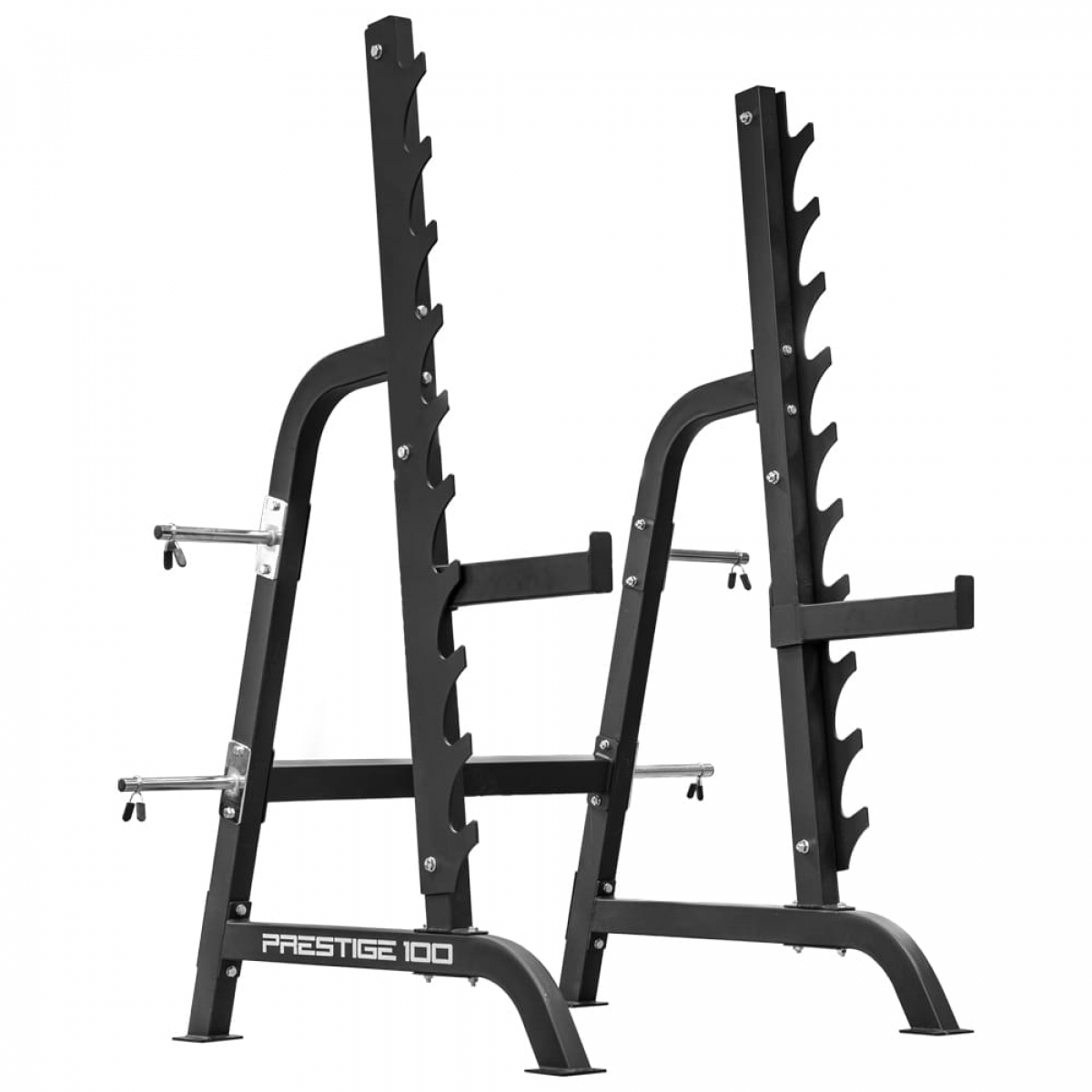
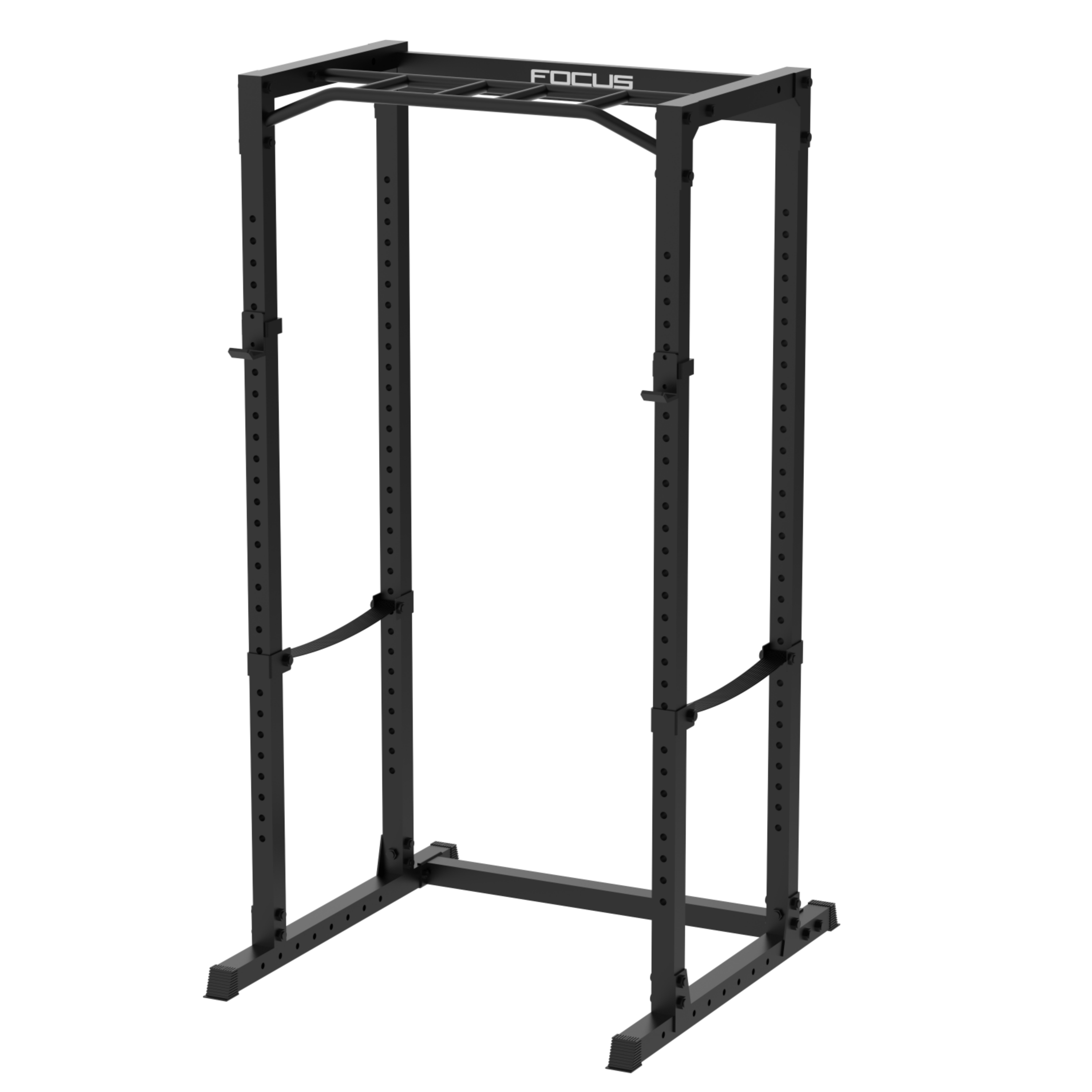
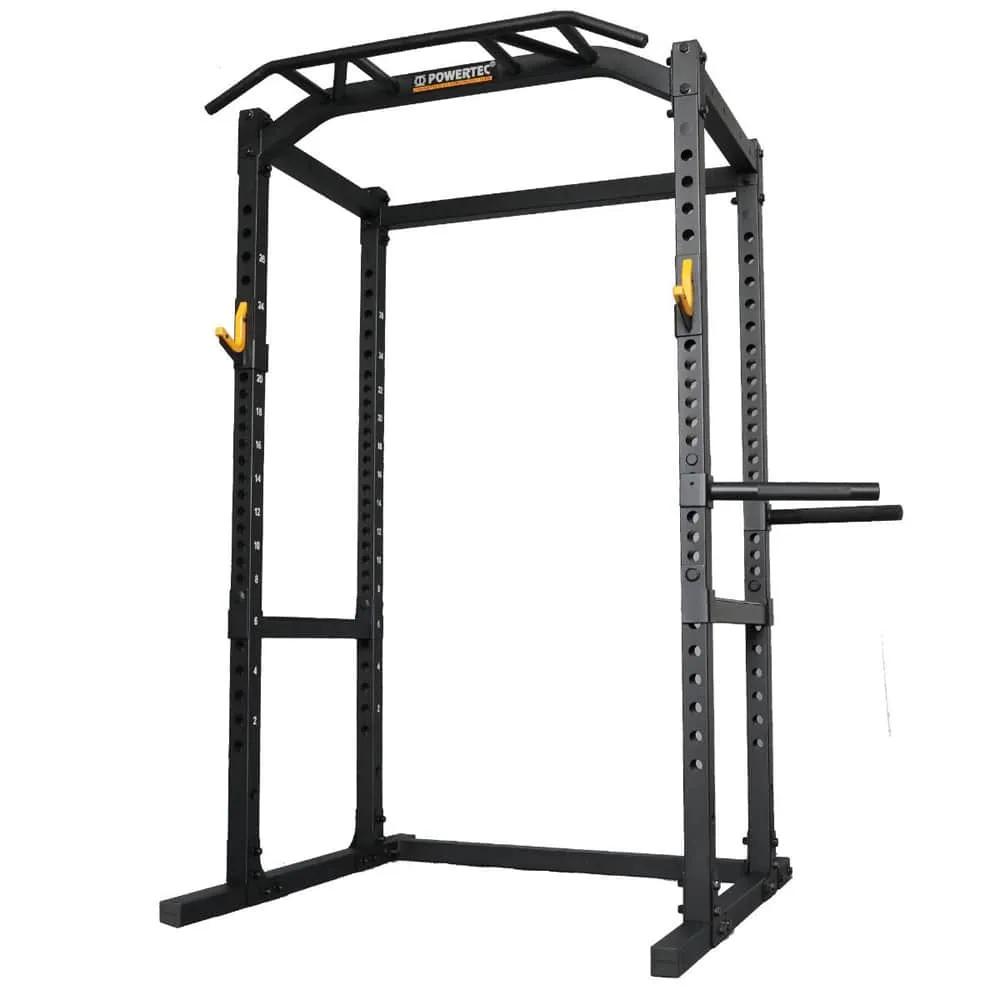
A squat stand has two uprights with hooks to hold the bar at the height you pick. Some come with spotter arms, which bolt on at the front and stick out to catch a dropped bar. A power rack (also called a cage) has four posts. You stand inside it, and the safety catches run across from the front posts to the rear ones, so the bar lands on them whichever way it falls.
Two catch types are common. Metal pins or arms are loud and can scratch the bar. Nylon straps are gentler on the bar and less jarring. Pins and straps only work in a power rack, while spotter arms attach to the front of the uprights of a stand.
Neither is automatically safe. A catch only helps if it sits at the right height, and that is the part people get wrong.
Set the catch and drop the bar
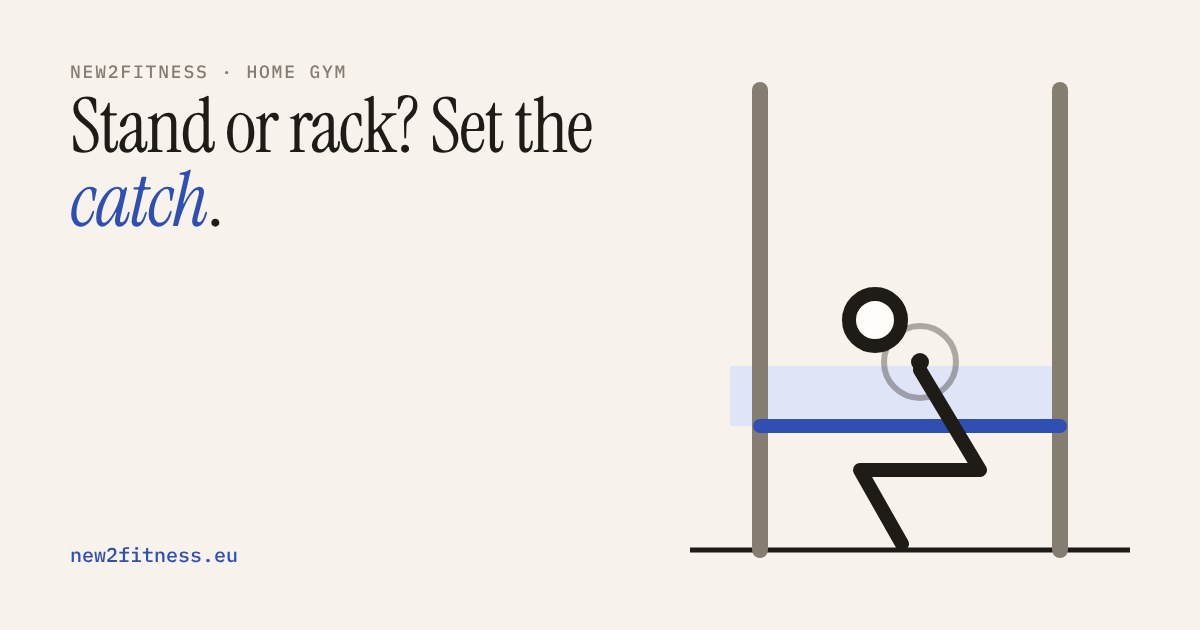
Safety catches are normally set about 2.5–5 cm (1–2 inches) below the lowest point of your squat. Higher than that and they block your depth. Lower than that and they are too far down to catch the bar in time. Try it below: set the height of the bar at the bottom of your squat, move the catch, then drop the bar.
Which one fits you?
| Squat stand | Power rack |
|---|
| Posts | Two uprights | Four posts, you stand inside |
| Catch | Spotter arms on the front | Pins or straps front to back |
| Floor space | Smaller | Bigger footprint |
| Good for | Tight rooms, lighter loads | Training alone, heavier loads |
In plain terms: if you will lift alone and expect to work towards heavy squats or bench presses, a power rack is the safer shape because the catch surrounds you. If space is tight, a stand with spotter arms can work, as long as the arms are included and you set them as above. If you will only ever use light weights, you may not need either: dumbbells and a bench need no catch at all.
Three things that decide the fit
Hole spacing. Catches sit in holes drilled up the posts. If the holes are 5 cm apart, there is only a narrow band where the catch is in the right place for your depth. Try the 2.5 cm setting above and you will see more heights work. Closer spacing makes it easier to match the catch to you.
Ceiling and room. Measure your ceiling and compare it to the rack's listed height. If you plan to press overhead, stand against a wall with a broom handle held straight up and measure to the top of it: that is the clearance the bar needs.
Stability. A loaded rack can tip. Bolting it to the floor is the best fix, and some racks require it, so check the maker's instructions. If you cannot bolt it down, weight plates on the rack's plate holders add stability.
Whatever you buy, practise bailing out with an empty or very light bar first so you know what the catch does before you need it. If you have pain, an injury or a health condition, ask a doctor or physio before you start lifting heavy.
What to look for
- Catch included. Check that safety arms, pins or straps come in the box. If they are optional extras, add their cost.
- Load rating. Find the maker's stated load rating and make sure it is well above what you expect to lift, bar and plates together.
- Hole spacing and height range. Closer holes and a wide range of heights make the catch easier to set to your depth.
- Footprint and fixing. Compare the listed dimensions with your room, and check whether you can bolt it down.