Recovery · Explainer · 4 min ·
Can a nap make up for a short night? Place one in your day and see when it helps
Can a nap make up for a short night? It can help, but it doesn't repay missing sleep. In research on active adults, naps of about 30 to 60 minutes in the early afternoon gave the clearest gains in alertness and effort, while long or late naps can make it harder to fall asleep that night.
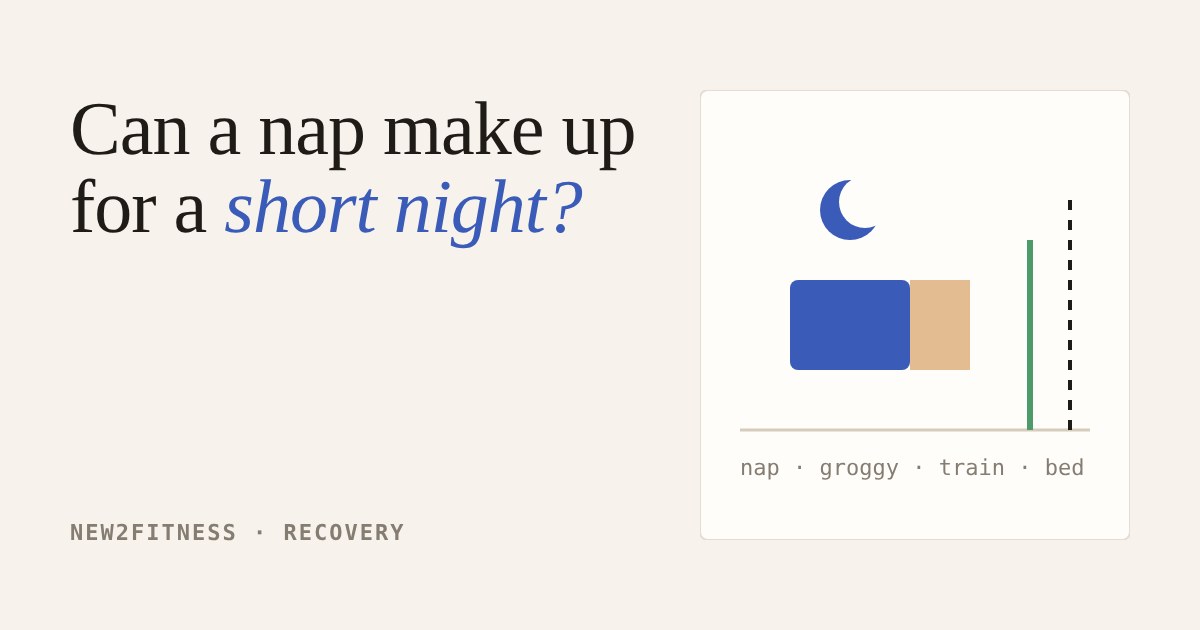
Place a nap in your own day, set how much you slept and when you go to bed, and see where the groggy spell lands, when an hour has passed for training, and whether the nap sits too close to bedtime.
The short answer
A nap can help after a short night, and it does not need to be long. In research on active adults, naps of about 30 to 60 minutes, taken in the early afternoon, gave the biggest gains in alertness and in how hard training felt. But a nap does not repay a night of missing sleep, and taken too late or too long it can make tonight's sleep worse.
Below you can place a nap in your own day and see where the groggy spell lands, when you could train, and how close it sits to bedtime.
Place a nap in your day
What the research found
A 2023 meta-analysis in the British Journal of Sports Medicine pooled 22 randomised trials with 291 people, all men aged 18 to 35, about half of them athletes. Naps were taken between 12:30 and 16:50, most often around 14:00. After a normal night, napping improved both mental and physical performance tests and lowered how tired people felt. The gains were clearest for naps of 30 to under 60 minutes.
Some trials followed a short night, and the naps helped there too. The authors were careful, though: there were fewer of those studies, and they said it cannot yet be shown that a nap fully cancels out the cost of lost sleep. The studies also covered only young men and many had a risk of bias, so treat the size of the effects as rough.
A separate 2021 review of 37 studies in Nature and Science of Sleep found a more mixed picture. Most studies saw a physical benefit, a few saw none, and two saw a worse result, such as slower sprints after a nap in well-rested young athletes. The benefit was most consistent when people were short on sleep.
Why you wake up groggy
That heavy, foggy feeling on waking is called sleep inertia. The review put it at 15 to 30 minutes for most people, with some studies in non-athletes finding effects for up to two hours. In the meta-analysis, people did better when at least an hour passed between waking and being tested. So if a hard session follows your nap, give yourself a buffer rather than going straight from bed to a heavy set.
When a nap backfires
Napping draws on the same sleepiness you need at bedtime. The review suggested naps of up to about 45 minutes can lengthen the time it takes to fall asleep that night, and that longer, later naps carry the most risk. It suggested keeping naps in the early to mid afternoon, roughly 13:00 to 16:00. That is why the planner flags long naps, late naps and naps that end close to bed.
A simple way to try it
- Keep it early. Start between about 13:00 and 15:00 if you can.
- Start with 20 to 30 minutes. Go longer only if you wake feeling better, not worse, and still sleep well at night.
- Set an alarm. It stops a short nap drifting into a long one.
- Leave a buffer before hard training. Aim for an hour if you can, or a lighter session if you can't.
- Treat it as a top-up. If you are short on sleep often, fix the routine at night first.
Who this isn't for
This is general information, not medical advice. If you feel exhausted every day despite long nights, fall asleep when you don't mean to, or doze off while driving or at work, talk to a doctor. If you work shifts or have a health condition, the right nap plan for you may differ.